Ant bait: does it really kill the whole colony, how is it different from an anti-ant pad, and how do you use both?
 KAI67 anti-ant pad, large 30x42 cm฿148 · 1 pad · Order via LINE or fill in the form
Order ฿148LINE @814ddrza
Swipe for the next topic · 10 topics
How does ant bait work?
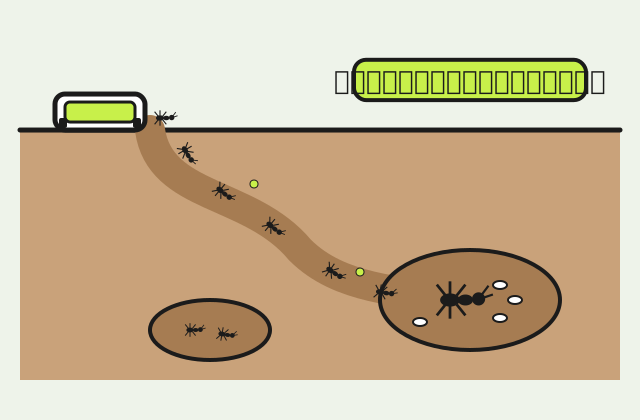
Ant bait works through the ants’ own habits. Foraging workers eat bait that tastes sweet or contains protein and fat, then carry it back to the nest. Inside, ants feed each other mouth to mouth, known as trophallaxis (Wikipedia), so the active ingredient spreads to ants that never leave the nest, including the queen and larvae.
The key is that the ingredient must act slowly enough for workers to get home and share food first. If it were strong enough to kill ants at the bait, nobody would carry any back. That is why ant bait does not show results immediately like spray; in the first days you may even see more ants at the bait, because ants recruit others to food they find.
Bait comes in several forms: gel dotted along ant lines, liquid bait, granules for outdoor use and ready-made bait stations with holes for ants to enter. All of them are insecticide products. Before buying, read the label for which ants it works on, where it must not be placed and how long it is expected to take.
Does ant bait really kill the whole colony?
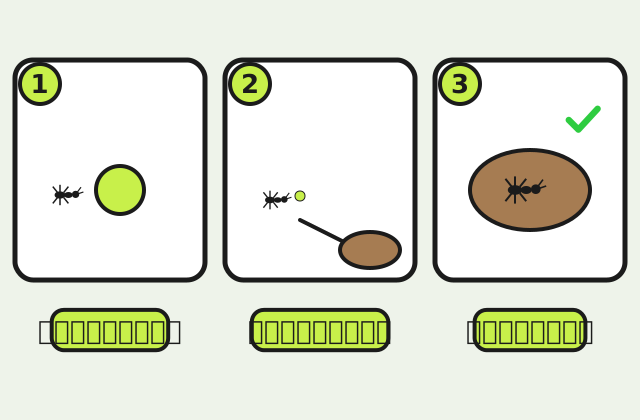
It can, but not every time. Killing the colony means the ingredient reaches the queen and larvae so the nest stops growing. That happens when ants eat enough bait, keep carrying it back, and the ants in your house really come from the nest the bait reaches. If any of those is missing, ants may drop for a while and then return.
There are several reasons ant bait disappoints. Some species have many linked nests and several queens. Some prefer sweet food for a period and then switch to protein. If easier food is still around, such as an open cat bowl, ants eat that instead. And if someone sprays near the bait, the ants carrying it die before reaching the nest.
So “kills the colony” on a pack should be read as a method designed to reach the nest, not a promise that ants will be gone within so many days. Check the time frame on the label, and if ants have not dropped after using it fully as directed, contact the maker or a licensed pest control company to find out what species you have.
How is ant bait different from an anti-ant pad?
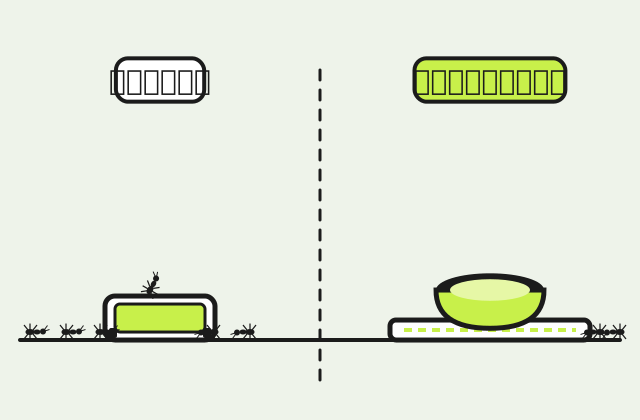
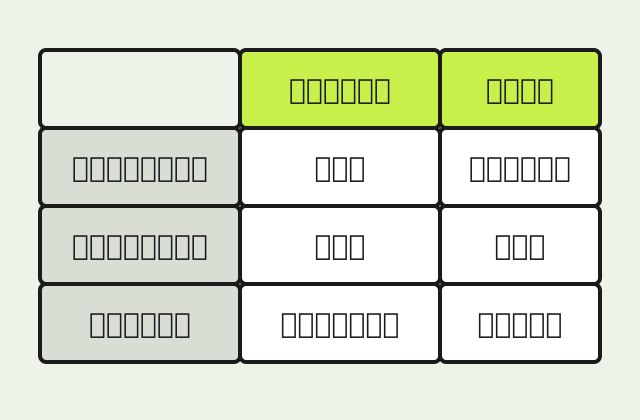
They have different goals. Bait aims to reduce ants at the nest; it has to be where ants walk and ants have to eat it. An anti-ant pad aims to stop ants reaching what sits on it; ants do not need to eat anything, nothing is refilled and it does not target the nest. A pad works as soon as it is placed correctly, while bait takes days to weeks according to the label.
Handling differs too. Every bait contains an insecticide that ants must eat, so it must be kept away from children, pets and food. The KAI67 anti-ant pad is a rigid plastic sheet with a coated surface ants will not cross; it has no smell and needs nothing added. We are still waiting for the maker’s documents on the coating, so we advise not letting pets lick it regularly. What a pad cannot do is deal with the nest. Ants can still walk around it; they just cannot reach what is on it.
Which is better depends on the problem. If ants only go for one bowl or sugar jar, a pad may be enough. If ants cover the kitchen every day from the same route, you also need something that deals with the nest. You can test whether a pad works in your home with the method in does an anti-ant pad work.
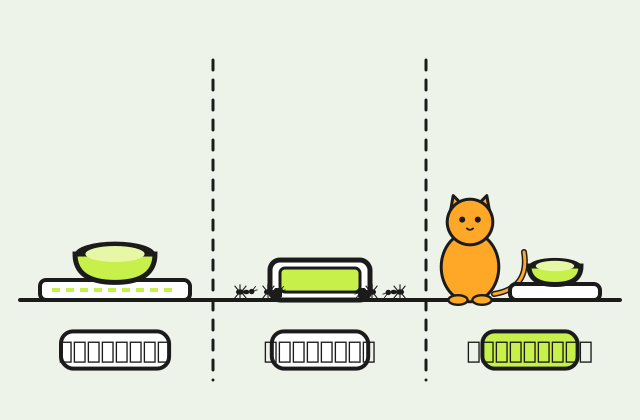
Bait, pad or both: how do you choose?
Choose by the size of the problem. If ants only go for one spot, such as a cat bowl, sugar jar or snack box, start by cleaning, wiping the ant trail and putting items on an anti-ant pad. If ants appear in many places every day from the same route, or you find the nest but cannot reach it, use ant bait on the trail together with pads at the food spots.
Using both has an order. First put all food on pads or in clip-lid boxes, so the bait becomes the easiest food in the house. Then place bait on the ant trail away from food bowls and the dining table. If a bowl is still open to ants, they will ignore the bait; and bait placed right next to a pad draws ants close to food for no reason.
The 30x42 cm anti-ant pad costs ฿148 and fits two bowls up to 16 cm across while keeping a 5 cm margin, which suits spots you need to protect while waiting for bait to work. For pet bowls, see the detailed feeding-corner setup in ants in cat food.
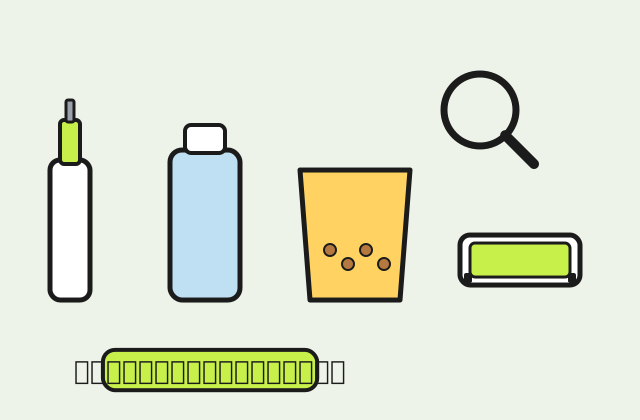
What types of ant bait are there, and how do you judge a brand?
Bait on sale falls into four types: gel dotted along ant lines, liquid bait often used for sugar-loving ants, granules designed for outdoor or perimeter use, and ready-made stations holding the bait inside with holes for ants to enter. In a home with children or pets, closed stations are easier to control than gel squeezed straight onto the floor.
We have not tested any brand, so we do not rank them. What to look for on the label instead: a hazardous substance registration number from the Thai Food and Drug Administration, the active ingredient, the ant species it is for, where it must not be placed, first aid instructions, and the name and address of the maker or importer. If the label lacks these, do not buy it for home use.
The species matters too. Fire ants, black ants and tiny orange ants like different food, so a bait that works well in one home may fail in another. If you are not sure what ants you have, see the basic checks in small black ants in the house.
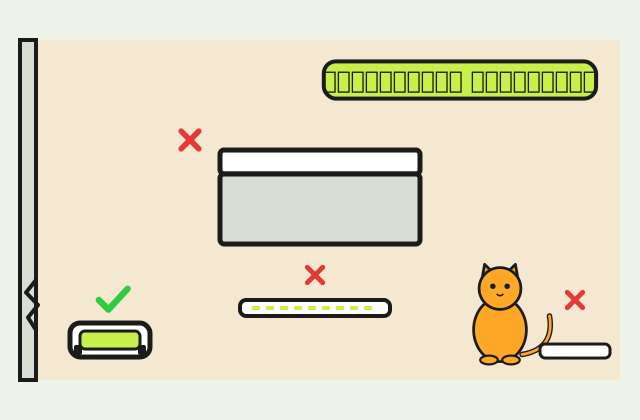
Where should you place ant bait, and where not?
Place it on the ant trail close to the way in or the nest, such as along the floor-wall joint, next to the crack ants come out of, or under the sink in a spot children and pets cannot reach. A good spot is one ants pass regularly but people do not touch, away from food, plates, bowls and food preparation surfaces.
Never put it on a food preparation counter, the dining table, in a food cupboard, next to a pet’s food or water bowl, where a crawling baby can reach, or on an anti-ant pad. Bait on a pad does not work because ants cannot get up to it. Spots where rain falls or water pools spoil bait quickly; check whether the label says indoor or outdoor use.
Do not squeeze gel bait near sockets, switches or cables. If ants are going in and out of a socket, see the safe approach in ants in power outlets and place bait on the floor trail away from the electrics instead.
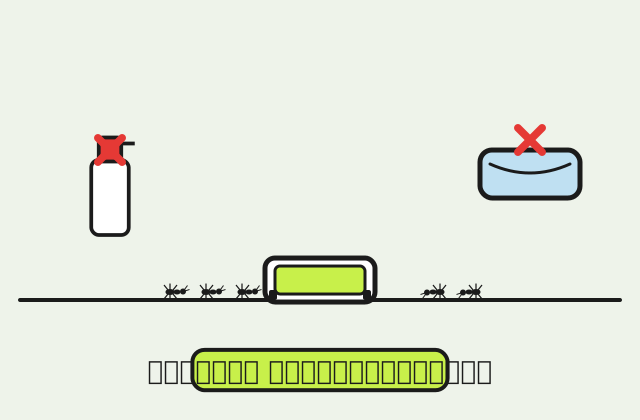
Can you spray or wipe the ant trail near the bait?
No, because bait needs workers to carry it home. If you spray, ants carrying bait die before reaching the nest, and the smell of some sprays makes ants avoid the area. Wiping the trail leading to the bait removes the scent guide, so other ants cannot find it. The result is bait used up without the ingredient reaching the nest.
This seems to contradict the trail-wiping we recommend in other articles. It is really a matter of timing and place. If you are not using bait, wiping the whole trail is the right thing to do. If you decide to use bait, wipe only tables, counters and food spots, and leave the trail from the entry to the bait for the period the label advises.
Strong-smelling floor cleaner and essential oils should also be avoided on that line during the same period. Most natural repellents work by disrupting the scent trail, so they cancel out bait. Read which methods repel and when to use them in natural ant repellent.
More ants after placing bait: is that normal?
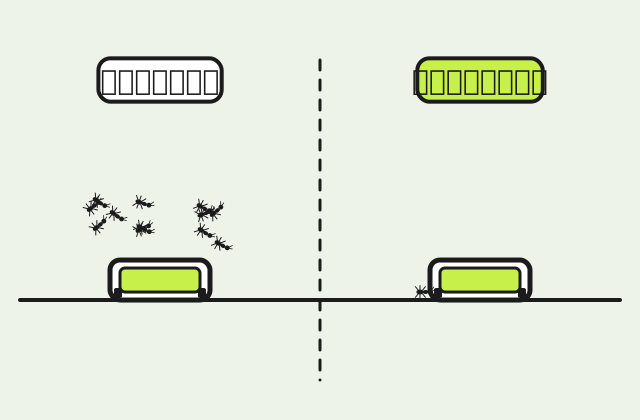
It is normal at first. When ants find food they like, they recruit others to help carry it, so you see more ants at the bait than before. It is a sign the ants accept the bait, not that it has failed. Leave it, do not spray, and check the bait has not run out; if it goes quickly, top it up as the label says.
The case to worry about is the opposite: ants walk past the bait without interest. That means they do not like that bait or there is easier food in the house. First check that all food is put away. If it is and ants still ignore the bait, you may need one with a different food base, for example protein instead of sweet.
Give it the time the label states and count the ants on the trail at the same time each day; it shows much more clearly than guessing. If numbers keep falling, the ant bait is working. If they are the same at the end of the period, ask a pest control company whether there is another nest or a species that needs a different method.
Can you use ant bait in a home with small children and pets?
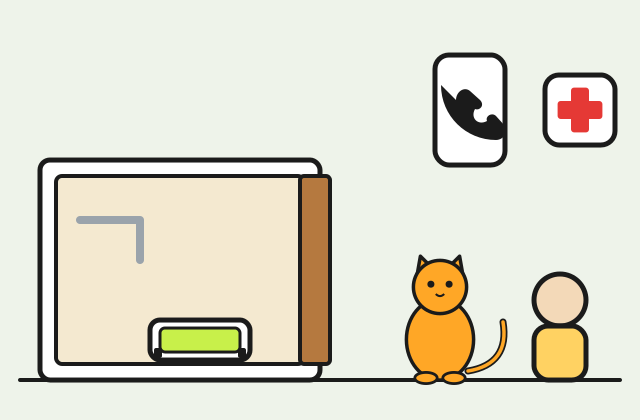
You can if you follow every label instruction, but the type and spot must be chosen well. Bait is made from food with an appealing smell, so babies, cats and dogs may be curious. Choose closed stations whose label says they are designed for indoor use, and place them where children and pets truly cannot reach, such as behind cupboards, under a sink with a closed door, or behind appliances away from sockets.
Never squeeze gel bait onto the floor of a room where a baby crawls or pets play, and never place it near pet food or water bowls. If you suspect a child or pet has eaten bait, keep the pack or label and contact a doctor or vet at once. In Thailand, people can call the Ramathibodi Poison Center on 1367 for advice.
If you would rather not use insecticides at home, rely on steps with no spraying or baiting: keep food in clip-lid boxes, wipe ant trails, use anti-ant pads under bowls and jars, seal entry points, and have a pest control company deal with the nest outside instead. It is slower but the risks are easier to control.
Frequently asked questions about ant bait
Does bait work on every kind of ant?
No. Different species like different food and some have many nests and queens. Check which species the label names. If the ants in your home will not eat the bait, try one with a different food base or ask a pest control company.
I already use an anti-ant pad. Do I still need bait?
Not always. If ants only come to the spot with the pad and nowhere else, the pad may be enough. If ants cover the kitchen every day or are in many places, a pad protects only what is on it, and you also need something that deals with the nest.
Can I put bait on an anti-ant pad?
No. The pad stops ants reaching what sits on it, so bait on the pad will not be eaten. Put bait on the floor trail away from the pad and away from food.
Can I make my own bait from borax and sugar?
Borax is a chemical that can be harmful if swallowed or handled a lot. Home mixes make strength and placement hard to control, so we do not recommend them in homes with children or pets. If you want to use bait, use a product with a proper label and registration.
How long does placed bait last?
It depends on the product and conditions. Bait that dries out, goes mouldy or gets wet no longer attracts ants. Check the expiry date on the pack and how often the label says to replace it, and dispose of old stations as the label directs.
Can ant bait and termite bait be used interchangeably?
No. They are designed for different insects, with different attractants and placement. Use a product whose label names the insect you actually have.