Ants in dog food: what to do, and how to ant-proof big bowls and outdoor feeding
 KAI67 anti-ant pad, large 30x42 cm฿148 · 1 pad · Order via LINE or fill in the form
Order ฿148LINE @814ddrza
Swipe for the next topic · 10 topics
Why do you get ants in dog food?
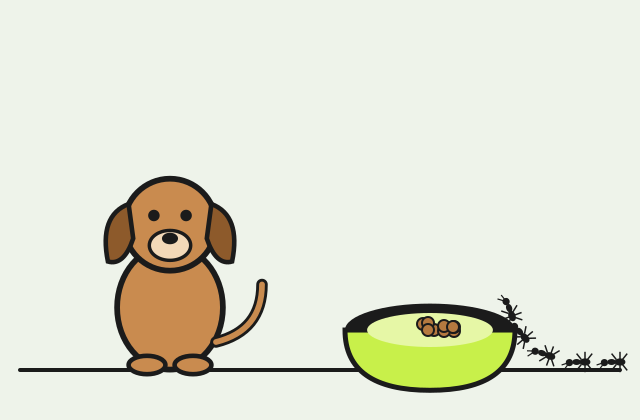
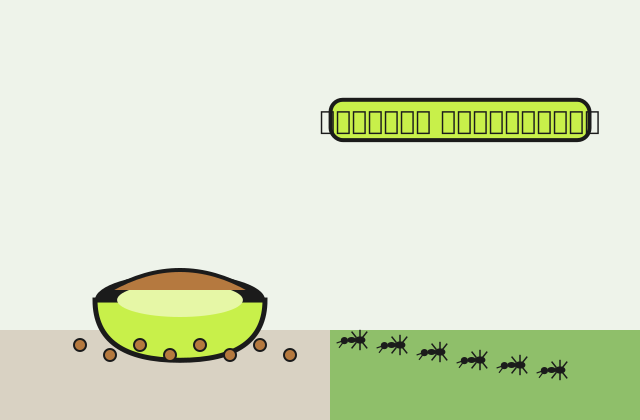
Ants come to dog food because both kibble and wet food are high in fat and protein and smell strong enough for ants to find from far away, and many homes pour a large amount into a big bowl so the dog can eat all day. The food stays in the bowl long enough for a first ant to find it and lay a scent trail for others to follow in a line.
Dogs eat faster and messier than cats. Kibble often bounces out of the bowl, and drool and food smears end up on the rim and floor. If the bowl is outdoors near a lawn, pot plants or a tree base, ants have only a short walk from the nest to the bowl, so these homes have ant problems more often than homes feeding indoors.
Another cause is treats, chews and food the dog carries off to hide in corners, under cushions, behind the sofa or in its kennel. These are not in the bowl, so they are easily forgotten, but they attract ants just the same.
You see ants in the dog bowl: what should you do right away?
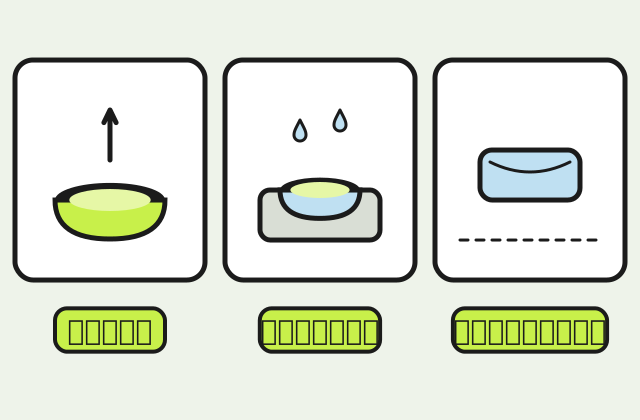
Lift the bowl before your dog eats, throw out food with lots of ants or leftover wet food, wash the bowl with dish soap and dry it. Then wipe the floor along the ant route with a cloth in water and dish soap, then plain water, all the way to the entry point, such as a door frame, a sliding door track or the floor-wall joint.
Meanwhile, feed your dog from a spare bowl somewhere else for now. Never spray insecticide into the bowl or on the floor where your dog eats and walks, because dogs lick the floor and their paws and lie on that floor, so residue gets into their mouths easily.
If you use natural methods to help at entry points, choose ones without powders or strong smells near the bowl. How safe each method is with pets is covered in natural ant repellent: what really works.
Can your dog still eat food that ants got into?
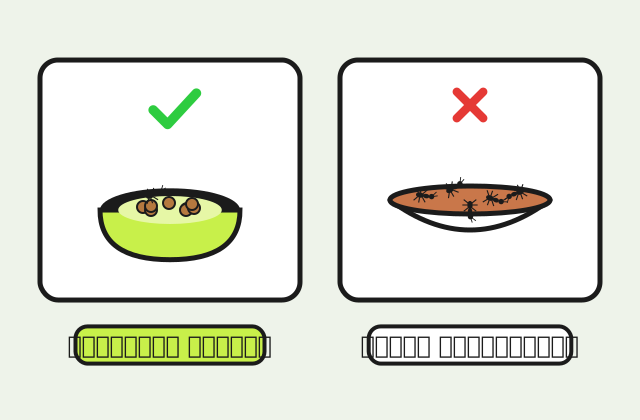
It depends on the type of food and the number of ants. With dry kibble and just a few ants on top, many owners tip it onto a tray so the ants walk off and then use it. But if there are lots of ants, dead ants mixed through, damp clumped food, or wet food that was left out, throw it all away, because ants walk over soil, floors and bins first, and wet food left out spoils easily anyway.
Food that has had spray or insecticide on it, whether sprayed at ants in the bowl or near the bowl so the mist drifted over, must be thrown out every time, and the bowl washed thoroughly before reuse. Big dogs eat fast and finish a bowl in minutes, so there is no chance to separate out any contaminated part.
If your dog has already eaten food with ants in it and shows anything unusual, such as vomiting, heavy drooling, a swollen mouth or face, pawing at its face non-stop or lethargy, take it to a vet and say what kind of ants you saw and whether any insecticide was used recently. This article is not a veterinary diagnosis.
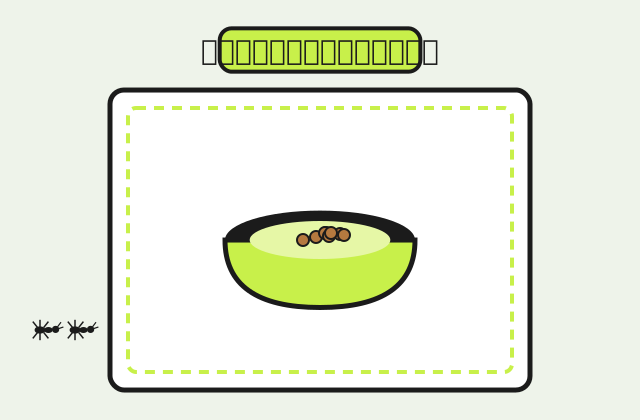
How do you fit a big dog bowl on an anti-ant pad with enough margin?
The rule is 5 cm of pad showing on every side of the bowl. The 30x42 cm anti-ant pad costs ฿148 and has about 20x32 cm of usable space after the margin. It fits two bowls up to 16 cm across. For a larger dog bowl, use one bowl per pad, and measure first to make sure it fits inside the usable space.
A big dog’s water and food bowls are often too large to share one pad. Split them onto two pads, or protect just the food bowl, which attracts far more ants than the water bowl. If the bowl is larger than the usable space, the margin will be too small and ants will climb from the floor to the rim, so switch to a raised stand with legs and block the legs instead.
Some dogs push the bowl off-centre or step on the pad and dirty it. Check the bowl position after every meal, use a heavy or rubber-based non-slip bowl, and wipe the pad daily. For the safety of pads with pets and what we are still waiting on from the maker, see is an anti-ant pad safe.
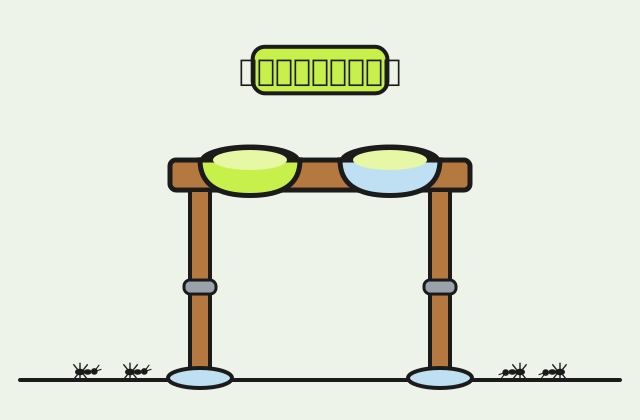
How do you ant-proof a raised dog feeder?
A raised feeder is easier to ant-proof than a bowl on the floor, because ants can only climb up the legs. Block every leg, for example with a full ring of anti-ant gel or by standing the legs in cups of water, and check that the stand does not lean on the wall and that no cloth, cable or toy reaches up from the floor. If the stand has a single leg or a solid base, stand the base on an anti-ant pad instead.
KAI67 anti-ant gel costs ฿109 and can go around the stand legs, but we have not yet received the ingredient document from the distributor. Dogs that lick or chew table legs may lick the gel, so apply it low down where the dog can hardly reach, or use cups of water instead, and ask us on LINE before using it.
Cups of water under the legs need changing daily and can breed mosquitoes, and water-loving dogs may kick them over. Choose the method that suits your dog, and check all four legs regularly, because if even one leg is not blocked, ants will get up.
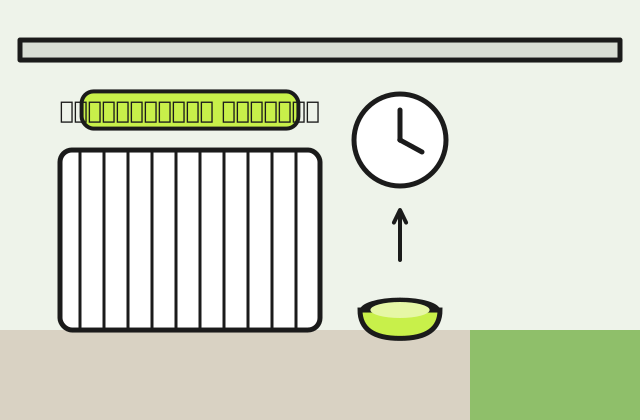
Lots of ants when feeding your dog outdoors or in a kennel: what can you do?
There are far more ants outdoors than inside, so this is where ants in dog food tend to be worst, and leaving food out all day is almost the same as feeding the ants. The most effective fix is feeding at set times: wait for your dog to finish, take the bowl in, wash it and sweep up spilled kibble around the feeding spot. Change the water daily, because water with food bits in it draws more ants than clean water.
The feeding spot should be on concrete or a hard surface under the eaves, away from lawns, soil, pot plants and tree bases, where nests are often close by. If you use an anti-ant pad outdoors, put it under the eaves out of direct sun and rain, because sun and standing water wear the surface faster than the manufacturer states.
Dogs in kennels often drop food on the kennel floor and in its gaps. Clean the kennel and its tray every day. If the kennel sits on soil, move it to a hard surface, or raise it on a base whose legs can be blocked against ants.
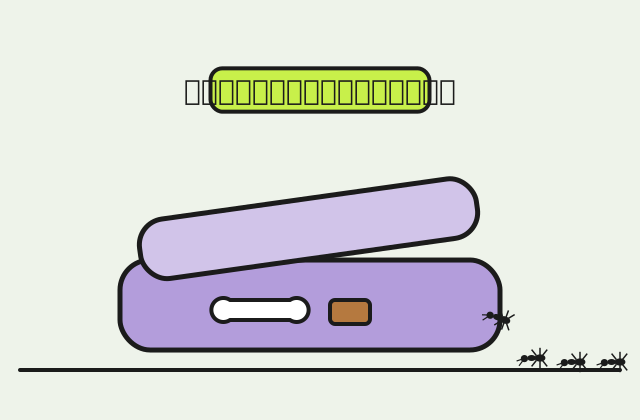
Do treats, bones and chews make ants come?
They can, and they are often the cause nobody finds. Many dogs carry treats, chews or food off to hide under cushions, behind the sofa, in the kennel or in a corner. Crumbs and drool on chews attract ants just like food in the bowl. If ants come into the house even though the bowl is clean, follow the ant line; you will often find something your dog has hidden.
Put away chews your dog has finished with every day, wash rubber toys that hold treats, because crumbs stay in the holes, and wash your dog’s bed regularly. Keep opened treat bags in rubber-sealed containers in a cupboard your dog cannot open.
If ants are in several parts of the house at once, not just around your dog’s things, see the overview on finding the source and dealing with it room by room in ants in the house.
Your dog was bitten by ants or ate them: is it dangerous?
A dog that eats a few ants with its food usually shows no symptoms, but a dog bitten many times, especially by fire ants found in gardens and around homes, may be in pain, swollen and very itchy. Background on this group of ants is in the Wikipedia article on fire ants. If your dog seems unwell, see a vet.
Signs that mean a prompt vet visit include a swollen face or muzzle, difficulty breathing, repeated vomiting, heavy drooling, a rash or bumps in many places, licking or chewing paws non-stop, and unusual lethargy. Puppies, old dogs and small breeds are at more risk than large adult dogs when bitten by many ants at once.
If you see orange-red biting ants around the feeding spot or where your dog sleeps, move the bowl and bed at once, and deal with the nest using a pet-safe method as the product label says, or have a licensed pest control company handle it, telling them you have pets.
How should you store big bags of dog food so ants cannot get in?
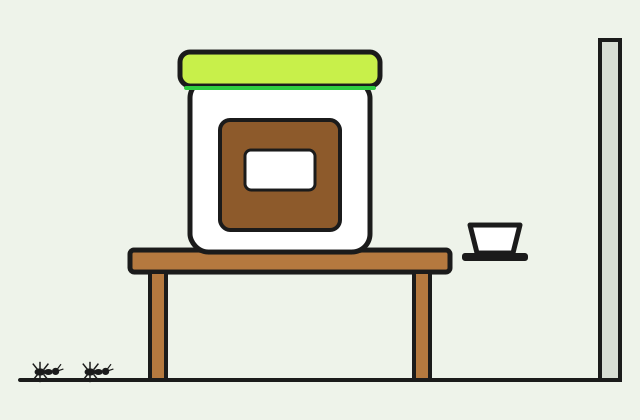
Big bags of dog food last for weeks, so they are more likely to get ants than small ones. Put the whole bag into a bin whose lid has a rubber seal all round, clip it shut after every scoop, and stand the bin on a shelf or base off the floor and away from the wall. Keeping the whole bag means you still have the label, expiry date and batch number, and keep the scoop outside the bin.
If you pour food straight from the bag into the bin, wash the bin and dry it completely before each new bag. Do not add new food on top of old dust at the bottom, because built-up dust and oil go rancid and draw ants. In humid homes, portion food into smaller containers that last a week, so you open the big bin less often.
For a bag ants have got into, check whether they are only at the top or throughout. If only at the top and the food is dry, throw out that part and move the rest into a sealed container. If ants are throughout or the food is damp, throw it away and clean the storage spot before putting a new bag there.
Frequently asked questions about ants in dog food
Can I use a moat-style ant-proof bowl for ants in dog food?
Yes, and it works straight away, but it needs refilling daily, and big dogs that eat vigorously often splash the moat or drop kibble into it, making a bridge. Choose a bowl size that suits your dog and check the moat after every meal.
If I move the dog bowl indoors, will the ants follow?
They can if the new spot has food crumbs and is within their foraging range. Before moving, wipe the ant route at the old spot, and protect the bowl at the new spot with an anti-ant pad or a raised stand with blocked legs from day one.
Can I use an anti-ant pad with a dog that chews things?
If your dog chews or licks the pad, watch it at first and pick the pad up when nobody is home, or switch to a raised stand with blocked legs. We have not yet received the surface coating document from the maker, so do not let your dog chew or lick the pad regularly.
How long can wet dog food stay in the bowl?
Follow the food label and your vet, because it varies by food type and temperature. Generally, serve it as meals and remove leftovers when your dog has finished, which cuts down both ants and spoiled food.
How many dog bowls fit on a 30x42 anti-ant pad?
Two bowls up to 16 cm across still leave a 5 cm margin. For bigger bowls, use one per pad, and measure first that it fits within the usable space of about 20x32 cm.