Ants in potted plants: where they come from, whether the plant suffers, and how to stop them getting indoors
 KAI67 anti-ant pad, large 30x42 cm฿148 · 1 pad · Order via LINE or fill in the form
Order ฿148LINE @814ddrza
Swipe for the next topic · 9 topics
Why are there ants in potted plants?
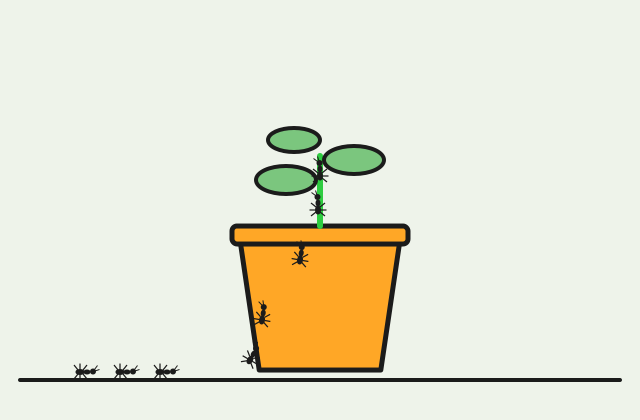
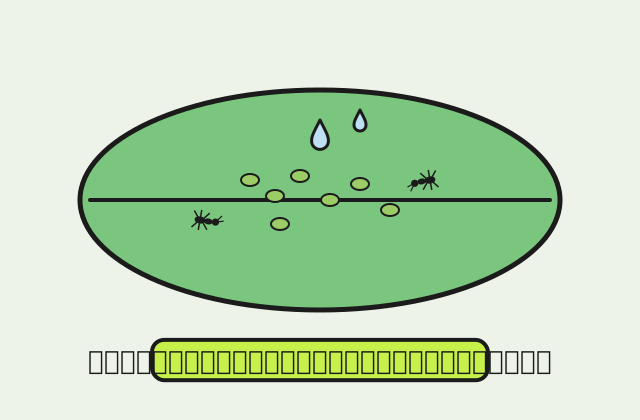
The most common reason is sap-sucking insects on the plant, such as aphids, mealybugs and scale insects. They suck sap from leaves and young shoots and excrete the extra sugar as honeydew. Ants love this honeydew, so they walk up and down the plant in lines all day without being interested in the leaves or roots themselves.
Ants and these insects help each other. The ants get food, and the insects get protection from natural enemies such as ladybirds that eat them; ants sometimes even move them to new shoots. That is why Thailand’s Department of Agricultural Extension advises managing ants as part of controlling mealybugs on fruit trees; see an example in ant management, Department of Agricultural Extension (in Thai).
A lesser reason is that the pot simply stands on an ant route, for example against a cracked wall, on the lawn, or with a branch touching a balcony railing the ants use. Sometimes ants are only passing through on the way to food elsewhere. If the plant has no sap-sucking insects and the soil has no nest, keep following the line to see where it ends.
How can you tell whether ants are there because of aphids or mealybugs?
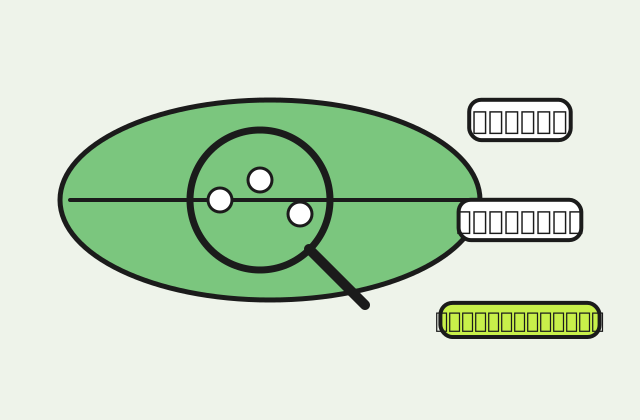
Turn over the leaves and check the young shoots, the joints of the branches and the base of the stem. Small green, black or brown insects in clusters are aphids. White cotton-like lumps in leaf joints are usually mealybugs. Brown bumps stuck firmly to stems may be scale insects. Ants will clearly be circling around these groups.
Other signs you can see without finding the insects: leaves that look glossy and feel sticky, sticky marks on the floor or table under the pot, and patches of black soot-like film on some leaves. That black film is sooty mould growing on the honeydew, and it reduces how much light the leaves get.
If the plant shows none of these signs but ants still go in and out of the soil, suspect a nest in the pot, which the next section covers. For very small ants walking in long lines from a pot into the house, see how to identify them in small black ants in the house.
How do you check for a nest of ants in potted plants?
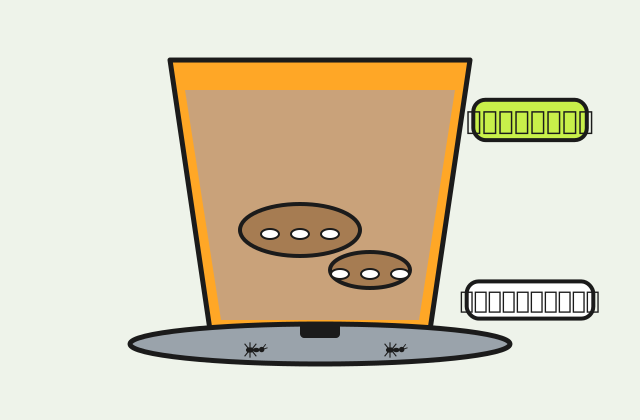
Potting soil is a favourite nest site because it is loose, easy to dig, holds warmth and stays damp from watering, especially in pots watered so seldom that the top dries while the bottom stays moist. In heavy rain, ants whose nests in the ground flood often move up into pots that sit higher.
To check, lift the pot and look at the base and the saucer. Small white oval grains like rice are ant eggs or pupae. Water gently: if lots of ants pour out of the surface or the drainage hole, the nest is in the pot. Small heaps of fine soil grains on the surface are another sign.
A nest in a pot leaves the soil full of tunnels, so water drains through too fast and some roots may dry out. Small plants and succulents show this more than large ones. If the pot is indoors, workers from the nest forage around the room every day, so deal with the pot itself rather than just wiping the ant line.
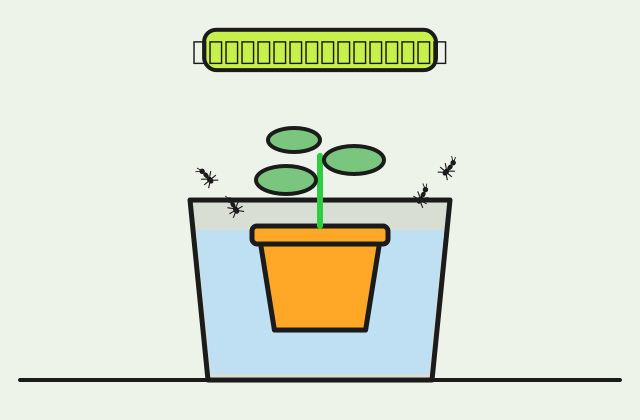
How do you soak a pot to drive out the ants?
The widely used method is to soak the pot in a bucket of water outdoors, with the water nearly up to the rim. Water replaces the air in the nest chambers, and the ants carry their eggs up to the surface and the stem. Do it away from the door so that fleeing ants do not walk into the house instead.
Check the plant first. Plants that cannot stand waterlogging for long, such as succulents, cacti and plants prone to root rot, should not be soaked for long; repot them instead, as in the next section. After soaking, lift the pot out and let all the water drain, and empty the bucket away from the house.
Soaking drives ants out of the pot but does not deal with sap-sucking insects. If the ants came for aphids, they will come back once the soil dries. Bait placed along the path near outdoor pots is another option for a large colony; follow the label and keep it away from children and pets. How bait works is explained in ant bait vs anti-ant pads.
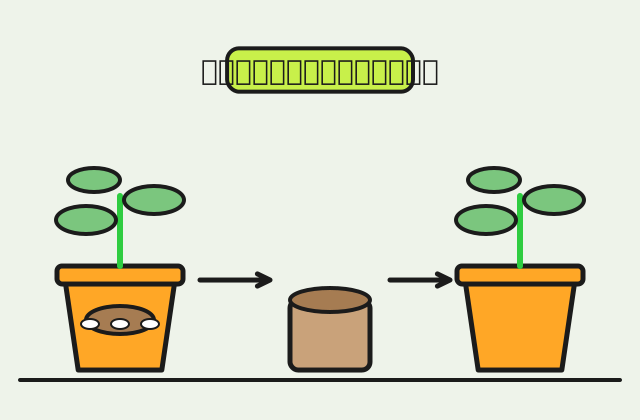
When should you change all the soil in the pot?
Change the soil when the nest is so large that the soil is tunnelled throughout, when the plant cannot handle soaking, or when ants move back in after soaking. Do it outdoors: ease the plant out of the pot, gently shake the old soil from the roots, and check for ant eggs stuck to them.
Wash the old pot and saucer with water and a brush, and replant in fresh, unopened potting mix. Do not tip the old soil with the nest near the house; if you want to reuse it in the garden, spread it away from the house and paths.
If you find sap-sucking insects on the roots while repotting, such as white fluff along them, cut off badly damaged parts or keep that pot apart from other plants. If you are not sure what pest it is, or it is a fruit plant that needs a pesticide, ask a local agricultural officer or garden supply shop, and use products only as labelled.
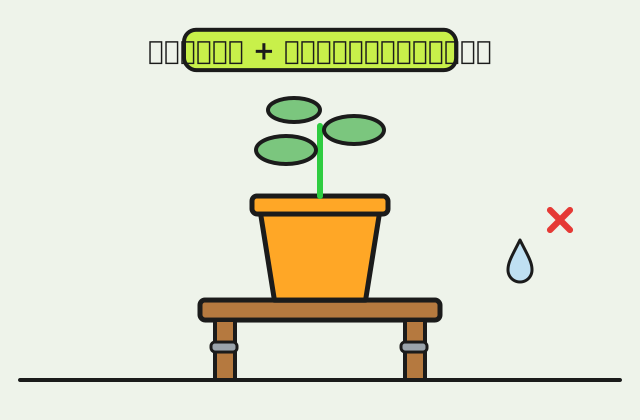
How do you stop ants climbing into pots again?
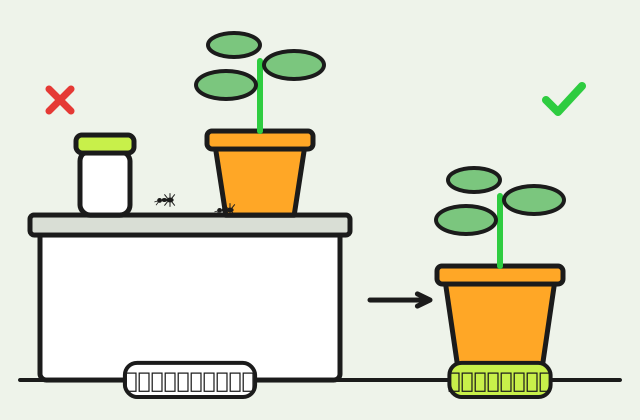
Once you have dealt with the cause of the ants in potted plants, whether insects or a nest, cut off the ants’ routes to the pot. Stand the pot on a plant stand rather than on soil or grass, move it away from walls and railings, and trim branches that touch the wall or other plants. A pot that touches nothing else has only one way up, the stand’s legs, which is far easier to block.
KAI67 anti-ant gel (฿109) can be painted in a ring around the stand’s legs, but choose a part of the leg that stays dry and away from watering run-off, because the seller has not yet confirmed how long the gel lasts in damp conditions. We are also still waiting for the ingredient sheet, so if children or pets tend to lick the stand, ask us on LINE before using it.
An anti-ant pad is not suited to going under a pot you water, because the maker advises avoiding moisture and strong sun, and water overflowing from the saucer leaves marks on the pad. Pads work better at food spots indoors. Choosing the right tool for each spot is covered in how to keep ants away.
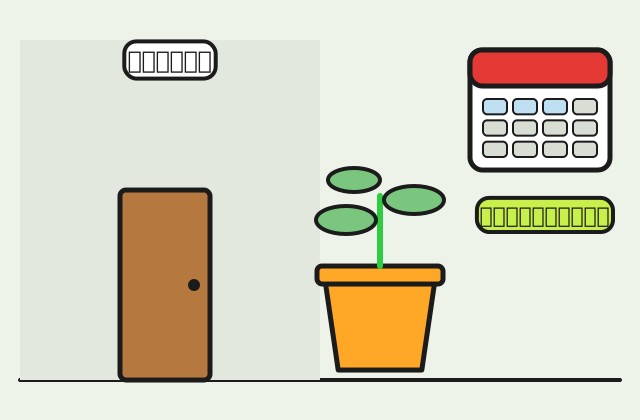
How do you stop ants coming in with a new plant?
Plants from a market or nursery may bring ants or sap-sucking insects in the soil. The simplest step is to keep a new pot outside for a few days before bringing it in. Each day, look under the leaves, check the surface of the soil and lift the pot to see the base. If ants are going in and out in a line or there is white fluff under the leaves, sort it out first.
While it waits outside, do not put the new pot right next to your existing plants, because insects and ants can cross between plants whose leaves touch. If you bought several plants at once, space them slightly apart so you can tell which one has the problem.
Plants carried in the car are another way ants hitch a ride. If ants drop off in the car on the way home, clean the boot the same day; see the steps in ants in the car. For pots wrapped in plastic from the shop, remove the plastic outdoors, because ants often hide in the folds.
Can an indoor pot bring ants into the kitchen?
Yes. A pot on the kitchen counter, the window ledge above the sink or the desk with a nest in its soil sends workers out to forage around it every day, and the nearest food is hit first. Many households wipe the counter daily and still have ants, because the source is the pot sitting right beside it.
Move the pot away from food areas at least until you are sure there is no nest. If you grow kitchen herbs such as basil or holy basil and want them near the kitchen, check under the leaves and the soil every week, and never use insect spray on plants whose leaves you eat, unless the label says it is for vegetables and you follow the stated harvest interval.
Keep kitchen food in lidded containers, and stand the jars ants like on an anti-ant pad with 5 cm clear at every edge. For a pot on a work desk, how to look after the whole desk is in ants on the desk.
Frequently asked questions about ants in potted plants
Do ants harm plants? Will the plant die?
Ants themselves rarely eat plants, but if they are there for aphids or mealybugs, those insects suck sap until shoots curl and sooty mould grows. If ants nest in the soil and tunnel it, some roots may dry out, so it is worth finding the cause.
Can I spray the leaves with dish soap?
Dish soaps differ in ingredients and may scorch some leaves. If you use it, test on a small leaf first, or simply rinse the insects off with plain water, and ask a garden supply shop if the infestation is heavy.
Can I sprinkle ant powder or chalk in the pot?
We do not recommend products not made for plants, because they can wash into the soil and roots when you water. If you need an insect product, choose one whose label says it can be used on potted plants.
Why did the ants come back after soaking the pot?
Usually because the sap-sucking insects are still on the plant, or the main nest is outside the pot, such as in a nearby wall or floor. Check under the leaves again and follow the ant line to see where it comes from.
Ants in balcony pots at a condo: should I tell the building?
If the problem is only in your own pots, you can deal with it yourself. If the ants come from wall gaps, pipes or railings shared with other units, tell the building management so they can check common areas.
Can I put a pot on an anti-ant pad?
Not for a pot you water, because the maker advises avoiding moisture and strong sun. Use a plant stand and cut off the routes around the pot instead, and use the pad at food spots.