Small black ants and tiny orange ants in the house: what they are, where they come from, and how to deal with them
 KAI67 anti-ant pad, large 30x42 cm฿148 · 1 pad · Order via LINE or fill in the form
Order ฿148LINE @814ddrza
Swipe for the next topic · 10 topics
What are the tiny ants in the house?
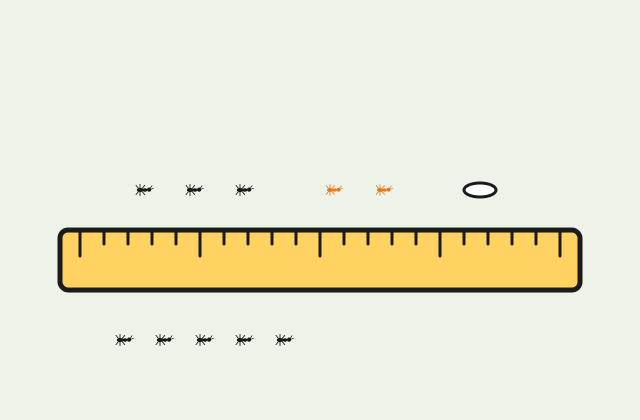
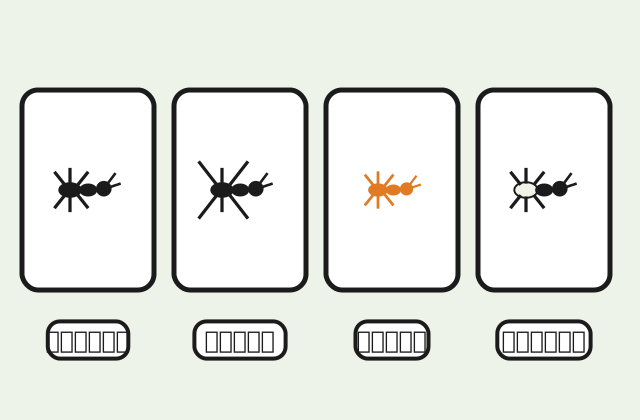
Many species of tiny ants turn up indoors, but by what you can see with the naked eye there are about four kinds: tiny black ants walking in neat lines, long-legged black ants that run fast and zigzag, tiny orange or pale yellow ants, and ants with a dark head but a pale, almost see-through abdomen. They are roughly 1 to 3 mm long, smaller than a grain of rice.
Looking by eye cannot give a firm species, because many species share similar colour and size. What helps is combining clues: colour, leg length, how they walk, whether they smell when crushed, and what food they go for. A photo or short video helps a pest control company identify them more easily.
Type matters because the approach differs. Some like sweet food, some protein or fat, some bite, and some respond to spray by splitting the nest and fleeing. Using the same method on every kind usually gives poorer results.
How many kinds of small black ants are there, and how do you tell them apart?
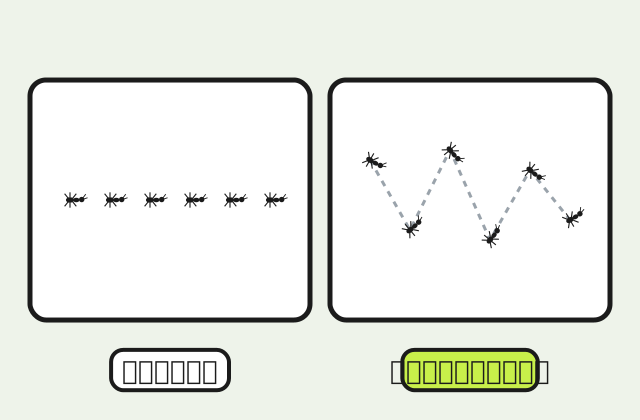
Small black ants at home can be roughly told apart by how they walk. The first kind walks in a straight line to food at a steady pace, usually on counters, sinks and sugar jars. The second has long legs and antennae, runs fast and zigzags as if without direction, usually on floors and walls, and comes indoors more when it rains.
Another group people lump in with small black ants gives off a sharp smell when crushed. They are tiny, black or dark brown, like sweet food and water, and tend to trail to sinks, bathrooms and bins. If crushing one gives a clear smell, it is likely one of this group; details are in the stinky ants section below.
If the black ants you find are over 5 mm, or walk alone rather than in a line, they may be a different species rather than typical tiny house ants. For chemical-free first steps against black ants, see natural ant repellent.
Are tiny orange ants dangerous?
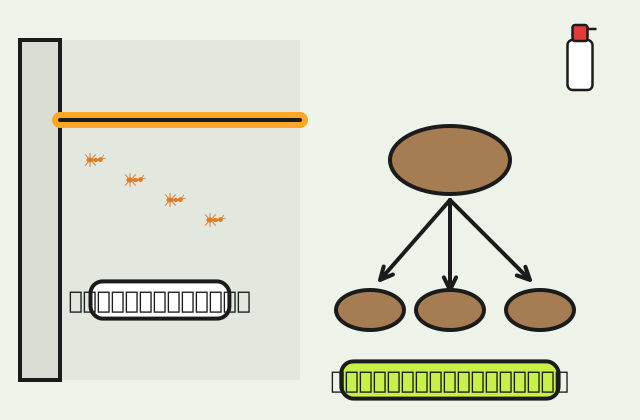
Tiny orange or pale yellow ants mostly do not bite people, but they are hard to get rid of because they nest deep in warm places such as walls, under floors, behind cupboards and around water pipes. One common group is the pharaoh ant, which according to Wikipedia has many queens per nest and spreads by budding into satellite nests.
The key point is that when the main nest is heavily disturbed, these ants move to a satellite nest. Spraying the ant line or visible nest can therefore scatter them to many spots around the house rather than getting rid of them. With tiny orange ants, use methods that do not disturb the nest hard, such as a bait whose label says it works on this species, combined with storing food tightly.
Another orange-red group is the fire ant, a little bigger than pharaoh ants, whose bite burns and can turn into a pus-filled bump. They usually nest in soil outside and walk in. If bitten, rinse with clean water and do not scratch. For heavy swelling, breathing difficulty, a swollen face or a rash spreading over the body, see a doctor at once.
What are stinky ants, and why do they smell when crushed?
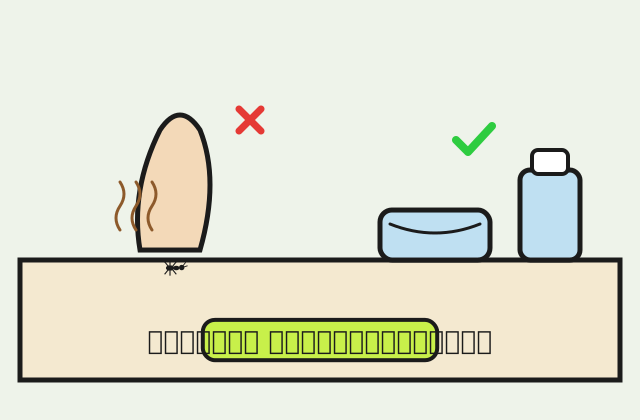
“Stinky ants” is a name for tiny ants that release a smell when crushed or disturbed. Most belong to the genus Tapinoma, such as ants with a dark head and pale abdomen, and small dark brown ants. The smell comes from a chemical they use for defence; some say it is like rotten coconut, others like a chemical cleaner. They like sweet food and water, so they turn up at sinks, bathrooms and kitchen counters.
Do not crush stinky ants on counters or tables where food goes, because the smell sticks to the surface and crushing does not reduce the ants. Wipe the whole line with a cloth dipped in water and dish soap from the far end to the entry point, then wash your hands. Soap and water removes the smell from hands and surfaces.
Stinky ants come indoors more when it rains, because their nests in the soil outside flood and they move in for dry space and food. At these times check door edges, window frames and pipes through the wall closely, and put sweet food in clip-lid boxes before the ants find it.
Where do small black ants come from?
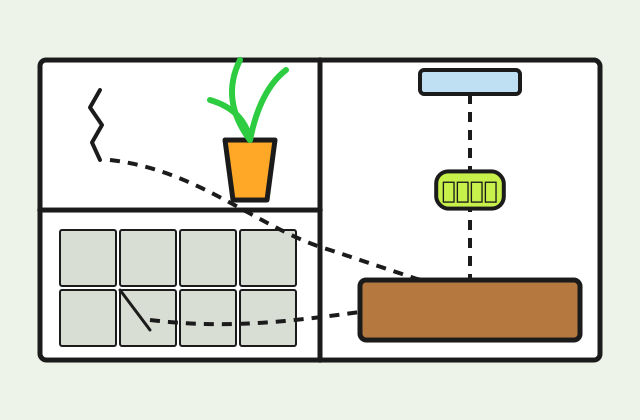
Small black ants come from nests closer than you think. Being tiny, they can nest in very narrow gaps: cracks in walls and tile grout, gaps under skirting, door and window frames, behind kitchen cupboards, around pipes under the sink, in pot plants and in storage boxes not opened for a long time. Sometimes the nest is outside and they walk in through door gaps.
To find the nest, watch in the evening or at night and shine a torch along the line from the food backwards. Ants heading home keep to edges, grooves and joints. Where the line disappears is the entry point; mark it. If there are several entry points, there may be several nests or one nest with several exits.
If there is no clear line and ants are scattered around the kitchen, set out a tiny lure such as a single drop of honey on paper, wait a while and see which way ants come from. Once you know, throw the paper away at once so it does not become a new food source.
Do tiny ants bite?
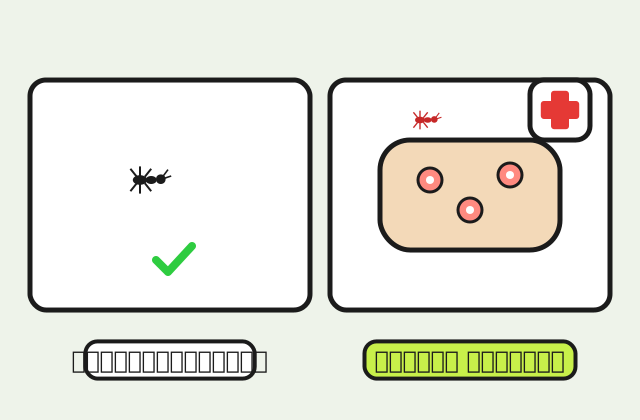
Most tiny house ants do not bite people, or the bite feels like a slight itch. Ants that really hurt are usually fire ants or other red-orange species, which bite and sting at once, causing a burning feeling and sometimes a pus-filled bump within a day. If a bite clearly hurts, photograph the ant if you can; it helps when seeing a doctor or calling pest control.
First aid is to wash the bite with clean water and soap, apply something cold and not pick or scratch the bump, which can get infected. With signs of a severe allergic reaction such as difficulty breathing, a swollen face or lips, a rash spreading over the body or faintness, go to hospital at once. Young children and anyone with previous insect sting allergies should see a doctor even if symptoms look mild.
If you are bitten in bed or on the sofa, first check it is really ants and not another insect, since mosquitoes and mites also cause itching. For dealing with a mattress that has ants, read ants in bed.
How do tiny ants get into a closed jar?
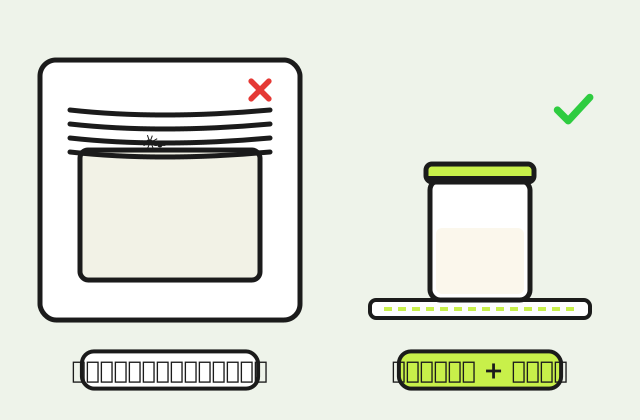
Because they are smaller than gaps we cannot see. An ordinary screw lid leaves a long spiral gap between the lid thread and the jar neck that ants can walk round and in through. A lid screwed on crooked or a chipped rim also leaves gaps. Tiny ants slip through a clipped or folded bag easily, so sweet food stored like this is always a target.
Containers that keep tiny ants out better are boxes or jars with a rubber seal round the lid and a clip, where the seal presses all the way round. If you keep your old jar, wipe the lid thread and rim clean, because sugar on the thread is what draws ants. Detailed storage for sugar and snacks is in ants in the sugar jar, and for rice bins see ants in rice.
Another layer is to stand the jar on an anti-ant pad with a 5 cm margin so ants never reach the jar at all. The 30x42 cm anti-ant pad costs ฿148 and has about 20x32 cm of usable space after the margin, enough for sugar, coffee and snack jars together. It has no smell and needs nothing added.
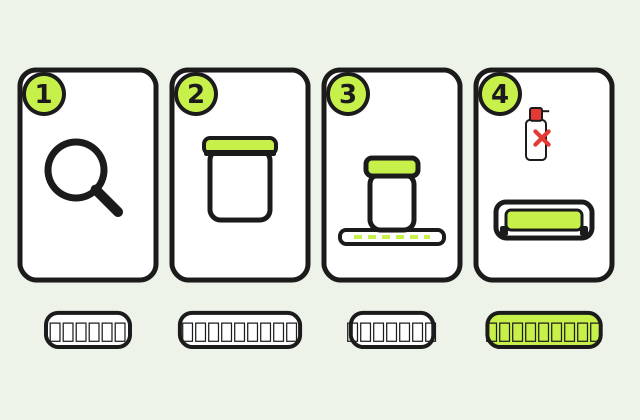
How do you get rid of small black ants in the house effectively?
Work in order. Start by checking the ants’ colour and behaviour, then put all food in clip-lid boxes, wipe sweet and greasy residue in the kitchen and empty the food waste bin daily. Next, wipe the whole ant trail to the entry point and stand jars or bowls that must stay out on an anti-ant pad. These steps leave small black ants with nothing to forage, which is needed whatever the species.
If ants still come daily by the same route after all that, the nest is close and still strong. The next step is a bait whose label says it works on that species, placed on the trail away from food, and no spraying during that period, especially with tiny orange ants that can split their nest. Read how bait works, where to place it and how to use it with a pad in ant bait vs anti-ant pads.
Seal the entry points you find with a material that suits the surface, such as tile grout or silicone for joints, but do it after the bait has had some time. Sealing straight away while the nest is still alive usually makes ants find a new exit. Holes or gaps related to sockets and cables should be handled by an electrician.
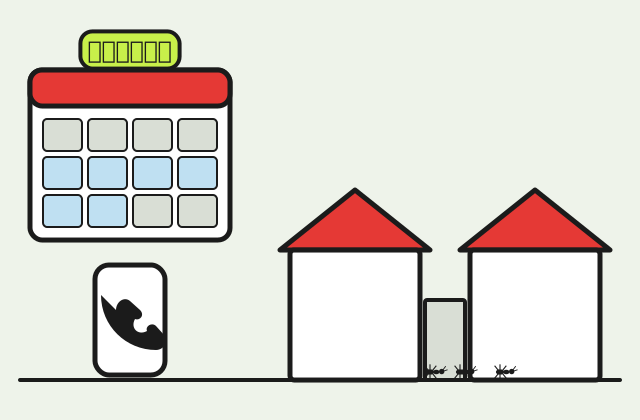
Why do tiny ants keep coming back after treatment?
Tiny ants can return for several reasons. Most often the nest is not gone because there are several nests or queens; it is the rainy season and ants outside move in for dry space; the nest is next door or in a shared wall, as in townhouses and condos; or there is still food or water you forgot, such as a dripping pipe, a pet bowl or a bin without a lid.
Ants coming back does not mean what you did failed. If there are far fewer than before, keep up the same steps and note which way they return, the old route or a new one. A new route often means another nest; the old route means the original nest is still there and needs finishing before you seal the way in.
If ants keep coming for several weeks despite your efforts, are in several rooms, or bite painfully, call a licensed pest control company to identify the species and find the nest. Tell them what you have already used so they choose a different method, and ask about safety if you have children or pets.
Frequently asked questions about small black ants in the house
The ants are so tiny I can barely see them. Are they really ants?
If they walk in a line, have two antennae and a body clearly in three parts, they are most likely ants. If the body is round with no waist, or they jump, they may be another insect such as a mite or small beetle. Take a zoomed photo with your phone and look again.
Where do tiny ants in the bathroom come from?
Usually from tile joints, drains and around the toilet base. They come for water and soap residue. Wipe the residue, re-grout cracked joints and dry the floor after using the bathroom.
Tiny ants on my phone and laptop: what should I do?
Tiny ants easily get into device openings. Never spray the device. Switch it off, move it somewhere without ants and clear food from the desk. If many ants are inside the device, contact the service centre.
Can baby powder keep tiny ants away?
It may slow ants briefly, but powder floats in the air and can be breathed in, and tiny ants often walk around it. It does nothing about the nest. Storing food, wiping trails and protecting food spots works more lastingly.
Are tiny red ants and tiny orange ants different?
Red-orange ants that bite painfully are usually fire ants, while pale orange or yellow tiny ants that rarely bite are usually another group. Colour alone is not certain; check whether they bite and whether the nest is in soil or indoors.
Do tiny ants in the house mean an omen?
There are many folk beliefs, but no evidence behind them. What is certain is that ants come for food, water and shelter, and dealing with those real causes helps whatever you believe.