Ants in the trash: why they come and how to wash, bag and place your bin so they stop
 KAI67 anti-ant pad, large 30x42 cm฿148 · 1 pad · Order via LINE or fill in the form
Order ฿148LINE @814ddrza
Swipe for the next topic · 9 topics
What causes ants in the trash?
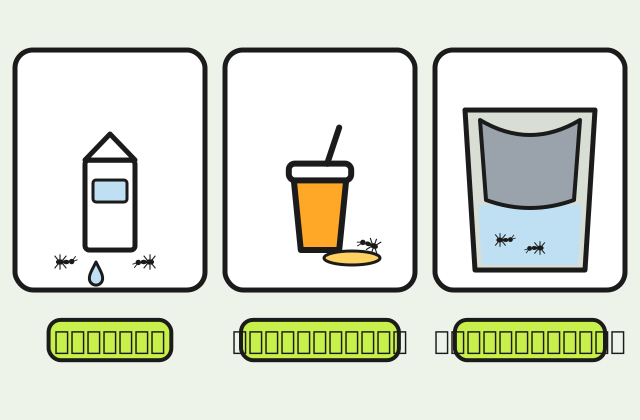
The main cause is sweet and fatty waste that goes in without being rinsed: milk cartons with milk left in the corners, bubble tea cups, snack bags, sauce sachets, fruit peel and fried chicken bones. These smell strongly from the first day. Foraging worker ants find them quickly and leave a scent trail for the rest of the colony to follow in a line.
The second cause is liquid escaping the bag. A thin bag pierced by fish bones or skewers lets curry and sweet drinks drip into the bottom of the bin, where nobody sees it because it sits under the bag. That puddle smells and gives ants both food and water. A bin that gets a new bag every day but is never lifted out and washed will still have ants circling it.
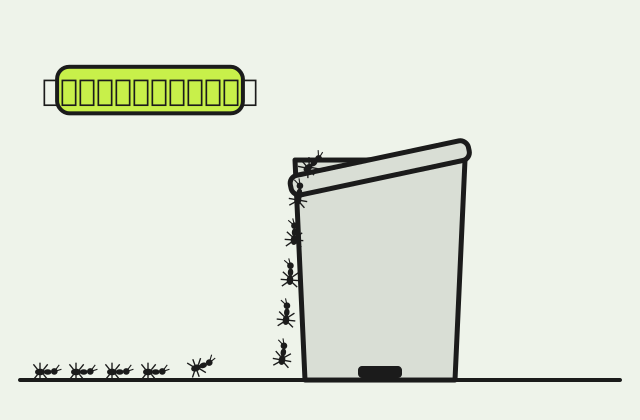
The third cause is the grime on the rim, under the lid and on the pedal. When you scrape plates into the bin, splashes stick to the inside edge and dry into sticky smears. A bin pushed against a wall or cabinet also becomes a bridge, so ants can walk straight from the wall line onto the bin without crossing open floor.
Do ants prefer wet or dry waste bins, and how do they differ?
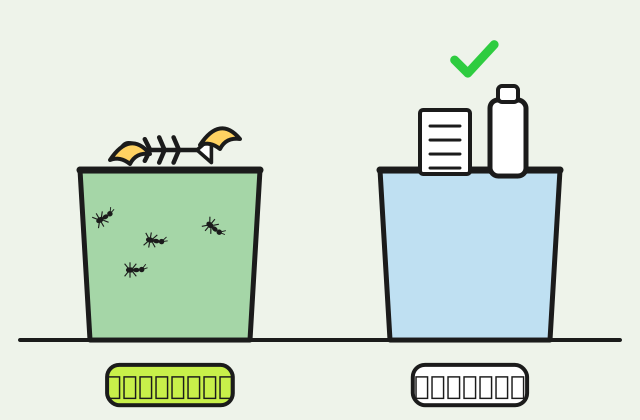
Ants prefer the wet waste bin in almost every case, because wet waste means food scraps, vegetable and fruit peel and liquid containing sugar and fat. A dry bin with only paper, plastic bags and rinsed bottles has almost nothing for ants to eat. Splitting waste into two bins makes ants easier to control, since only one bin needs close attention.
A dry bin only draws ants when unrinsed containers go into it: soda bottles with a little left in them, condensed milk cans, snack bags with crumbs and takeaway boxes with sauce. Pour the liquid down the sink, rinse or shake the container once with plain water and let it drip before it goes in. That alone takes the dry bin off the ants’ list.
A wet waste bin works better small and emptied often than large and left for days. If you do not make many scraps, put them in a small bag and tie it off every evening. Strong-smelling scraps such as fish bones and prawn shells can be wrapped in a second bag first, which cuts the smell and stops liquid seeping into the bin.
How do you wash a bin so ants do not come back?
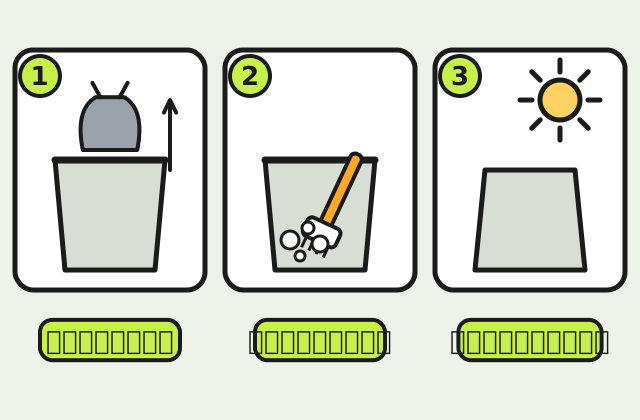
Wash the whole bin, not just the bag. Lift the bag out and tip away any liquid at the bottom. Scrub the base, inside walls, rim and underside of the lid with a long brush and water mixed with dish soap, rinse until the foam is gone, then turn the bin upside down in the sun or wipe it completely dry before the new bag goes in. Dish soap removes both the food residue and the scent trail ants left behind.
The spots people forget are the lid hinge, the pedal, the rod running from the pedal to the lid and the groove under the outer rim. Dirt there is invisible from above but ants reach it first. Use an old toothbrush along the grooves, then wipe the floor under the bin and the wall behind it, because drips from lifting the bag usually land there.
While you have ants, wash the wet bin once a week or whenever you see liquid in it, and wipe the rim every day when you change the bag. If the bin still smells after washing, dry it in the sun for longer or switch to a bin with a smooth surface, since deep scratches in old plastic hold grime better than a new surface.
Which bags help with ants in the trash, and how should you tie them?
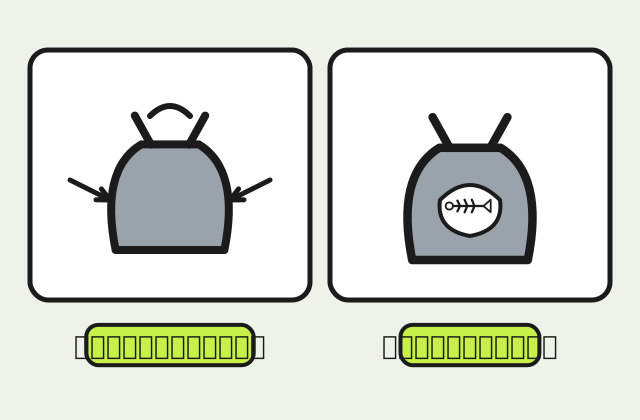
Choose bags thick enough not to tear and sized to fit the bin. A bag that is too small stretches thin and splits at the rim, and one that is too large folds up at the bottom where liquid collects in the creases. When you change it, press the air out and tie it tightly before lifting it out. Tying first stops spills on the floor and keeps the smell in until it goes out.
Sharp items such as fish bones, skewers and can lids should be wrapped in paper or a small bag first, since they cause most leaks. For leftover soup, strain out the solids and pour the liquid down the sink with the tap running. Never pour soup straight into the bag, because it seeps into the bin even if the bag does not tear.
A tied bag should not wait beside the bin or by the kitchen door overnight. Take it to the outdoor bin or the building’s rubbish room. If you cannot take it out yet, put it inside a bin with a tight lid. A bag sitting on the floor becomes a new spot for ants to find, and the line simply extends from the floor into the house.
How should you place the bin so ants struggle to reach it?
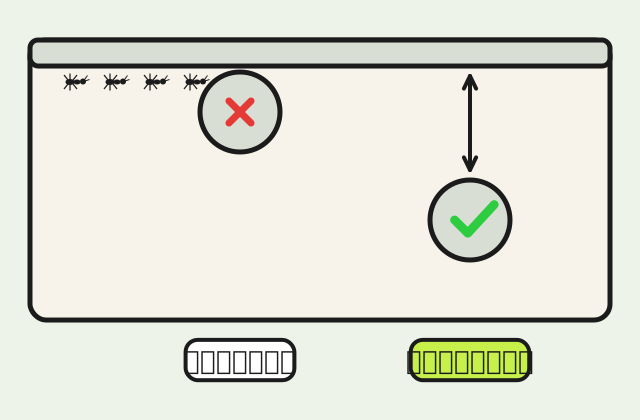
Keep the bin far enough from the wall or cabinets that you can see the floor all around it, and not next to the sugar jar, fruit basket or pet bowls. Ants prefer to walk along edges. If the bin stands away from them, ants have to cross open floor where you can see and wipe them easily, and the line does not carry on from the bin to the food beside it.
Outdoor bins should not stand on soil, grass or against a tree trunk, because many ant nests are in the soil around the house. Put them on concrete or a raised base and wash that spot when liquid drips. Bathroom bins, which many people search about, usually draw ants because of humidity and tissues with lotion or sweet drinks on them. Use a lidded bin there and change the bag more often.
If the home has several bins, keep food waste in the kitchen only. Do not throw snack wrappers or sweet drink cups into bedroom or study bins. A bedroom bin with sweet waste is one reason ants walk into bedrooms at night. If you also find ants on the bed, read ants in bed.
How do you choose a bin that ants find harder to get into?
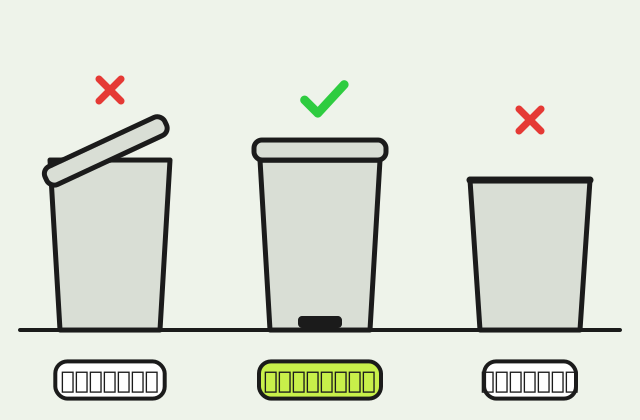
Bins ants find harder are ones whose lid closes fully when not in use, with smooth walls and no holes in the base. A pedal or press-lid bin that shuts by itself holds smells in better than a swing lid that often hangs half open, and far better than a bin with no lid. But no bin keeps ants out if the inside is dirty.
Lots of people search for an ant-proof bin, but what stops ants is the upkeep, not the model. An expensive bin holding three days of food scraps gets ants, while a plain bin emptied and wiped every day rarely does. If you replace your bin, look for one that comes apart for washing, has no deep crevices in the lid and is the right size for one to two days of your household’s food waste.
Bins with a removable inner bucket or a rubber seal around the lid help with smell, but the seal has to come off for washing too, or grime under it becomes the ants’ new favourite spot. For bins with automatic lids or other electrical parts, clean them as the manufacturer’s manual says and never wash the motor or battery compartment with water.
Can an anti-ant pad or gel stop ants in the trash?
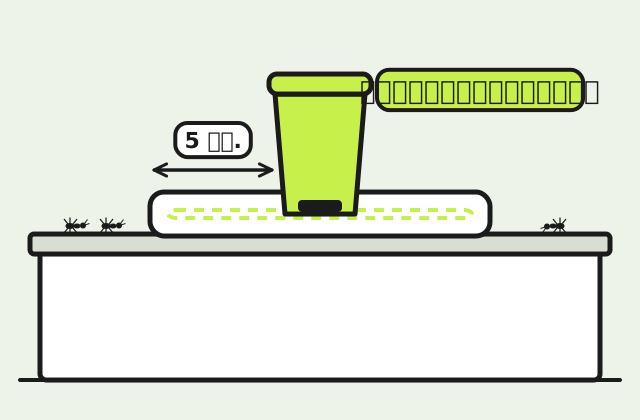
A pad works for a small food waste bin whose base is narrow enough to sit in the middle of the pad with at least 5 cm to every edge, as the manufacturer recommends. A 30x42 cm pad therefore suits a bin with a base up to about 20x32 cm, such as a scrap bin on the counter or beside the sink. A large floor bin with a wider base cannot use a pad.
On the product page, one customer review mentions placing the pad under a food waste bin, which is the same use described here. The extra step is wiping the pad whenever liquid or scraps drip on it, because anything on the pad acts as a bridge for ants to cross the edge. See the size and price at anti-ant pad 30x42 cm.
Anti-ant gel can go on a bin stand or shelf legs, which are vertical surfaces, painted as a complete ring on a fully dry surface. The seller has not yet confirmed how well it resists water, so avoid spots that get mopped or dripped on often. Details are at anti-ant gel. Both pad and gel are barriers; neither replaces washing the bin and tying the bag.
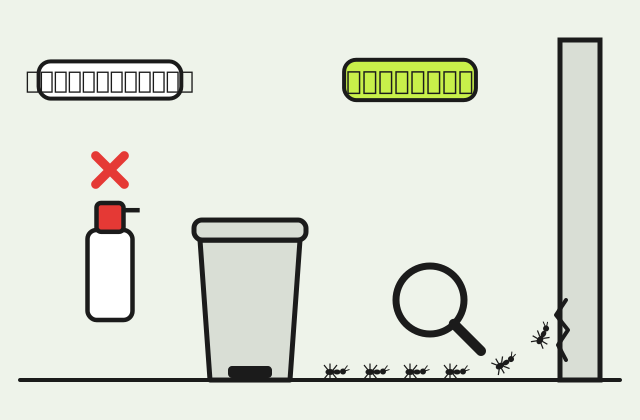
Can you spray for ants in the trash, and when do you need to find the nest?
Spraying insecticide on a kitchen bin is not recommended, because it is close to where food is prepared, and spray only kills the ants it touches. New ants from the nest replace them the next day. If it is a shared outdoor bin and you really need it, use a properly registered product and follow the label exactly. Never mix products or guess amounts yourself.
If you have washed the bin, changed how you throw things away and moved the bin, and ants still come from the same wall or floor crack every day, the nest is close and the bin is only the destination. Follow the line of ants back to see whether they come through a crack, a pipe gap or the door edge, then wipe the trail and seal the entry where you can.
For ants that keep coming from a nest inside the home, bait that workers carry back to the nest targets the source better than spray, but it must be placed away from children and pets as the label says. How to choose between bait and blocking with a pad is explained in ant bait vs anti-ant pad.
Frequently asked questions about ants in the trash
What should I do about ants in the bathroom bin?
Bathrooms are humid and bins there often hold tissues with lotion, toothpaste or sweet drinks from cups carried in. Use a lidded bin, change the bag more often, keep food and drink cups out of the bathroom bin and wipe the floor under it dry. If ants come from the tile grout or a pipe, wipe the trail and ask a plumber to check for leaks. Other causes and entry points are covered in ants in the bathroom.
Can I sprinkle detergent or salt in the bottom of the bin?
It is not recommended. Once wet, it turns into a soggy residue that is harder to clean, and it does not fix the real cause, which is food waste and pooled liquid. A better approach is a single sheet of newspaper or cardboard at the bottom to soak up liquid, replaced with every bag.
There are lots of ants in my outdoor bin. What can I do?
Raise the bin off soil and grass, keep the lid shut, wash the bin when liquid collects and never pile bags next to it. If it is a shared bin for a village or building, tell the management about collection times and washing the bin area, because it is a shared space you cannot fix alone.
How often should I wash the bin to stop ants in the trash?
While you have ants, wash the wet bin weekly and wipe the rim daily. Once they are gone, wash it every two weeks or whenever a bag leaks. A dry bin holding only rinsed items needs washing about once a month. The right frequency depends on how much food waste your household makes.
Do ants in the bin mean there is a nest in the house?
Not always. Ants may walk in from a nest outdoors through the door gap or a crack, find food and leave again. Watch where the line ends. If it ends outside, the nest is outdoors. If it ends in a wall or under the floor, the nest may be inside. How to trace the line is in our main guide to ants in the house.
Do scented bags or perfume in the bin keep ants away?
There is no evidence that they repel ants. A nice smell may cover bad odours for people, but the food scraps in the bin still give off the smell ants are looking for. Use them if you like the scent, but not instead of tying bags and washing the bin.