Ants in the house: why there are so many, how to find where they come in, and how to deal with them room by room
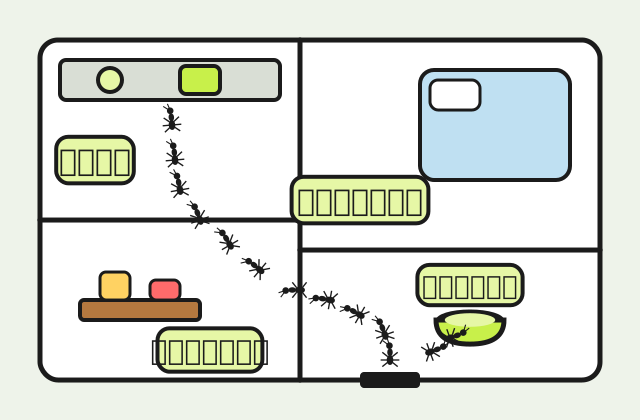
 KAI67 anti-ant pad, large 30x42 cm฿148 · 1 pad · Order via LINE or fill in the form
Order ฿148LINE @814ddrza
Swipe for the next topic · 21 topics
Why are there so many ants in the house?
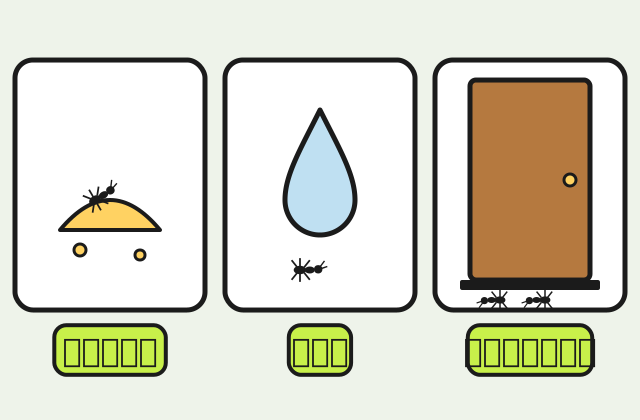
Numbers grow because the house has what the colony needs: food, water and shelter. Worker ants forage every day. When one finds snack crumbs, sticky drink spills or pet food, it lays a chemical called a pheromone along its route back to the nest. Other ants follow that scent, so the line keeps growing for as long as there is something to eat.
Sudden ant invasions often line up with heavy rain or very hot weather. Rain soaks or floods nests in the soil, so ants move somewhere drier. In the hot season ants travel further for water, which makes sinks, bathrooms and freshly watered pot plants magnets. Other causes people overlook are indoor bins without lids and snack bags left open on the table overnight.
For background on ant biology and how ants communicate by scent, see the Wikipedia article on ants. At home, the one thing to remember is that wiping away the ants is not enough. You also have to wipe the trail that carries the scent.
Where do ants get into the house, and how do you find the source?
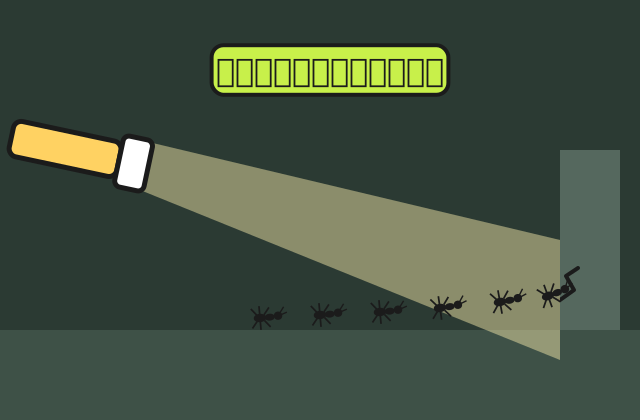
Find the source by following the ant line backwards to where it ends. The best time is early evening or before dawn, when many ants are busiest foraging. Hold a torch low and parallel to the floor so the line stands out against the surface. Follow it until the ants disappear into something. That is the entry point or nest you need to deal with.
Common entry points in Thai homes are the gap under the back door, the edges of sliding balcony doors, the joint between floor and wall, holes where drain pipes or air-con pipes pass through the wall, power sockets and switches, and cracked tile grout. Bathrooms have several of these in one room; how to check and seal them is in ants in the bathroom. If the line ends at a tree or a pot plant outside, the nest is outdoors. If it ends inside a wall or under the floor, the nest may be inside the house. If the source is a pot indoors or on the balcony, how to check the soil and the plant is in ants in potted plants, and for ants that hitch a ride in the car, see ants in the car. In a condo or high-rise, ants often come through pipe shafts and walls shared with other units; what to report to building management is in ants in a condo.
While you track the trail, do not wipe or spray the line yet, or it will scatter and you will lose the source. Put small pieces of coloured tape on the floor along the route first. Once you know where it starts, clean the whole route in one go.
What do people believe about ants in the house, and what is the real cause?
There are many beliefs about ants coming into the house. Some people see ants carrying things indoors as a sign of good fortune, some turn it into lucky numbers, and some read a line of ants leaving the house as a sign of rain or bad news. These are folk beliefs passed down over time. There is no evidence that ants can predict the future, so this article does not interpret omens.
What can be explained is the ants’ own behaviour. Ants moving house with their eggs usually happens before or after rain, because the old nest is damp or flooded. Ants carrying crumbs into a corner means food has been dropped nearby. And a surge of ants in the same week you brought home fruit or snacks has a very simple explanation.
If you hold these beliefs, that is your choice, but it is not a reason to leave ants in the kitchen or on the bed. Some ants give a painful sting, and some walk through bins and drains before reaching your plate. Keeping food sealed does not go against any belief.
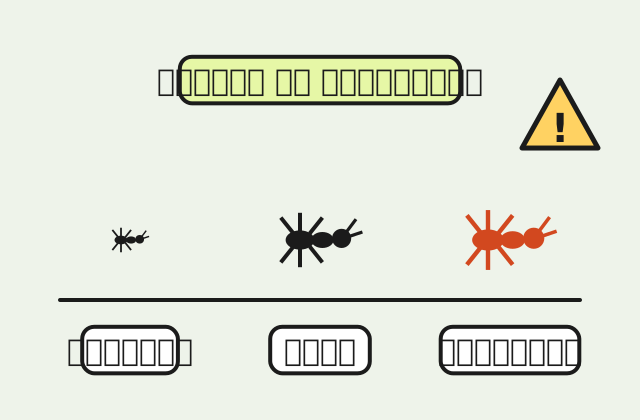
What kind of ants are in the house, and how can you tell?
You can make a rough guess from size, colour and behaviour. Tiny black or brown ants marching in long lines over the counter usually belong to groups that love sweet things and can get into any gap. Larger black ants often come in from outside. Orange-red ants whose bite burns and leaves a bump need extra care, because they may be fire ants. For telling tiny black, orange and smelly ants apart in more detail, see small black ants in the house.
A definite identification needs magnification and an expert. What you can do yourself is take a close-up photo of the ants next to a coin or ruler for scale, note what food they gather on, sweet, greasy or protein, and whether they bite. This helps a lot when choosing an ant bait or describing the problem to a pest control company.
If anyone in the house is bitten and swells badly, has trouble breathing or develops a rash spreading over the body, see a doctor straight away without waiting to identify the ant. In homes with babies crawling on the floor, biting ants matter more than ants that only come for snacks.
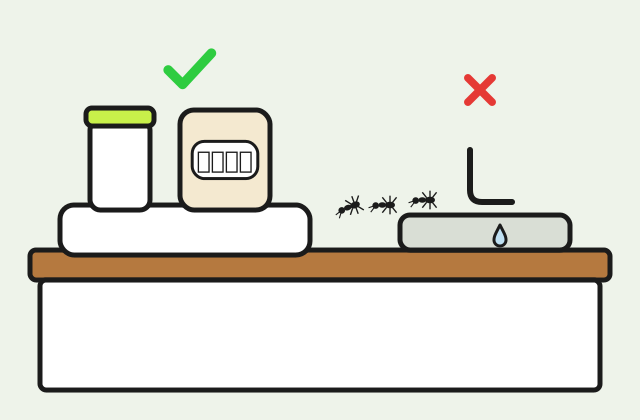
How do you deal with ants in the kitchen and around food?
The kitchen is where ants gather most, because food and water are in the same place. Sort things into three groups: move dry goods into containers with rubber-sealed lids, group the sweet things you use often in one corner and stand them on an anti-ant pad, and never leave food scraps or dirty dishes overnight. Do all three and ants have far fewer reasons to come in.
Each kitchen hotspot has its own details. Sugar jars have problems at the lid gap and the residue around the base; see ants in the sugar jar for the full fix. Rice bins are about damp and getting ants out of the grain, explained in ants in rice. Rice cookers and kettles with spilled rice or coffee draw ants too; the cooker spots to wipe and what never to do to the unit are in ants in the rice cooker. For a fridge with ants around the door seal, see how to clean it and when to call a technician in ants in the fridge.
What not to do in the kitchen is spray insecticide on food prep counters or directly into food containers. If you really need a chemical, read the label about removing food first, and use enclosed bait stations placed along the ant trail on the floor instead. A spot-by-spot routine with no spraying, from the sink and sauce bottles to the pantry and a nightly close-down, is in ants in the kitchen without chemicals.
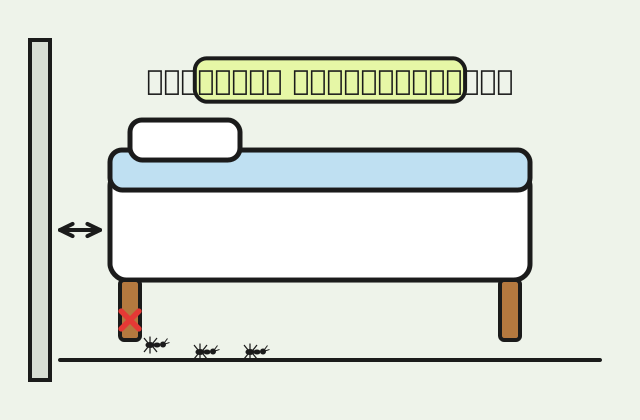
What should you do about ants in the bedroom and on the bed?
Ants in the bedroom usually come for snack crumbs or drinks eaten in bed, sweat and drool on pillows, or a sweet drink left by the bed. Start by not eating in bed for a while, wash the sheets and pillowcases, vacuum the mattress seams and under the bed, then follow the ants to their way in, which is often a window frame, a wall joint or a socket next to the bed.
A bed pushed against the wall and a blanket hanging to the floor act as bridges that let ants climb onto the mattress. Pull the bed slightly away from the wall and tuck the blanket up off the floor. For bed legs ants climb regularly, you can apply anti-ant gel as a ring around each leg, but if you have young children or pets that lick things, ask the shop about the ingredients first, because we have not yet received an ingredient document from the supplier.
If ants on the bed bite and leave red bumps every night even though the room is clean and there is no food, check for a nest in the wall, under a wooden floor or in an indoor pot plant. In that case bait or a pest control company will help more than a new mattress. Detailed steps, including latex mattresses, babies’ beds and ants in bed with no obvious cause, are in ants in bed.
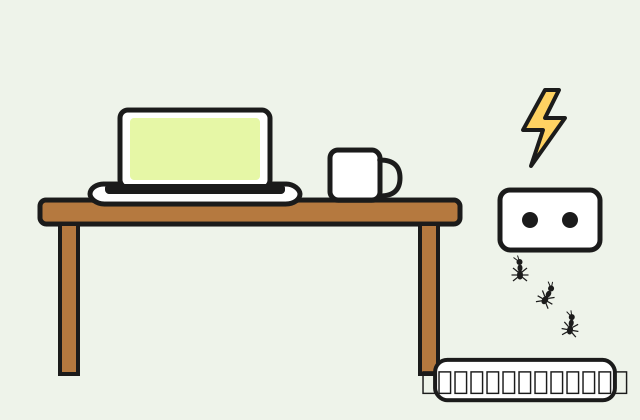
What should you watch out for with ants on the desk and around electrical devices?
Ants come to desks for snack crumbs, sweetened coffee and drink spills. Sometimes they also get into laptops, keyboards or power strips because it is warm and dark inside. The key things are: never spray insecticide or any liquid into electrical devices, and never open a wall socket yourself. If you see ants going in and out of a wall socket, have an electrician check it.
For a laptop, shut it down, unplug the charger, and remove the ants following the steps in ants in the laptop. For a phone with ants under the screen or in the charging port, which needs different handling, read ants in your phone. On the desk, eat your snacks somewhere else, wash cups straight after drinking, and wipe the desk every evening with a cloth dampened in water with a little dish soap. Power strips on the floor where ants pass should be lifted off the floor and kept away from food. Computer desks, dining tables and cables under the desk are covered in ants on the desk.
A wall socket with ants going in and out is an electrical matter. Do not spray anything, do not pour water, and do not remove the cover yourself. Only switch off the breaker if the electrician advises it, and let a licensed electrician inspect the socket and seal the way in. All the safe steps are in ants in power outlets.
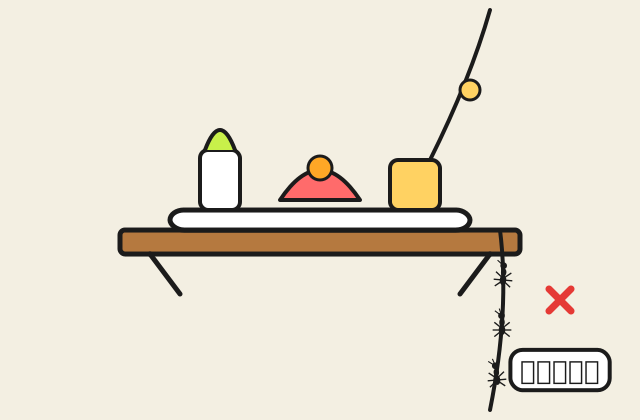
What can you do about ants on the altar shelf and offerings?
Ants go to the altar shelf because most offerings are sweets, ripe fruit and red soda left out for hours. The approach that suits an altar is no spray: shorten the time sweets stay out, put offerings on a plate or an anti-ant pad, and remove the bridges ants use to reach the shelf, such as lamp cables, cloths touching the wall or garlands resting against it.
Wall-mounted shelves have a particular issue: ants can walk straight up the wall without passing any table legs. A pad under the offerings protects only what sits on the pad, so the rest of the shelf still needs regular cleaning. How to arrange offerings so ants stay away, and what to avoid, is covered in ants on the Buddha shelf.
After worship, take the sweet offerings down the same day, wipe up red soda or syrup with a well-wrung damp cloth, and check the flower vase, because water left in a vase for days also attracts ants looking for water.
How do you stop ants getting into pet bowls in the house?
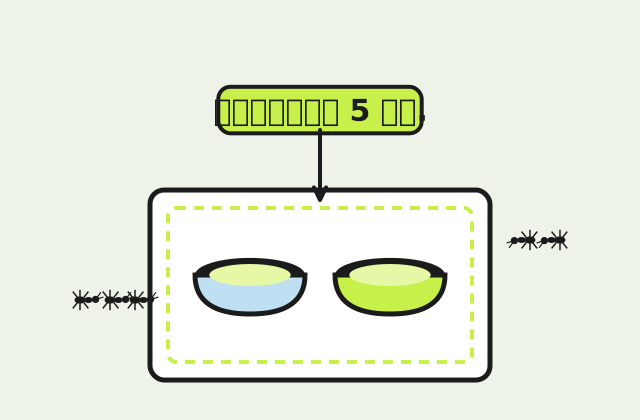
Ants go for pet bowls because cat and dog food smells strong, is high in fat and protein, and is often left out all day. In a home with pets, do not use sprays near the bowls. Instead, cut the ant route at the last step before the bowl: stand bowls on an anti-ant pad 5 cm from the edge or use a moat-style ant-proof bowl, and wipe up food around the bowls daily.
Common problems are ants in dry food poured out in advance, leftover wet food, and food bags folded shut loosely. Whether food ants have got into is still OK to feed, how to set up the feeding corner, and which pad size to choose are all covered in ants in cat food.
The KAI67 30x42 cm anti-ant pad costs ฿148 and fits a water bowl and a food bowl side by side while still leaving 5 cm of margin on every side. The manufacturer states results within 24 to 72 hours after placing it, so at first, put it down and do not keep moving it.
Can you get rid of ants in the house without chemicals?
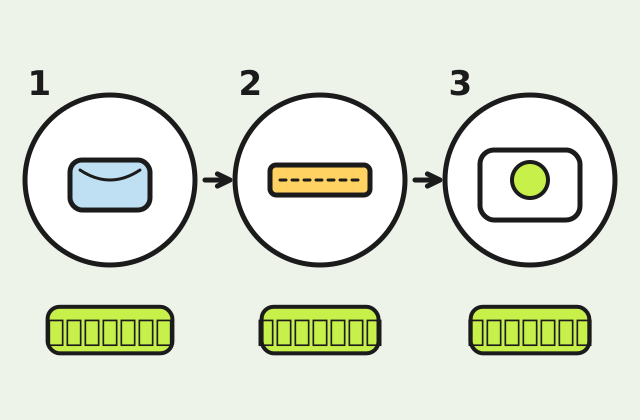
Yes, as long as the ants do not have a nest inside the house. Chemical-free control takes three steps. First, wipe the ant trail with water and dish soap so the scent disappears. Second, seal the cracks or holes ants use to get in. Third, cut off the food, for example by storing food in sealed containers, standing sweet things on an anti-ant pad, or using water dishes under cupboard legs.
Popular natural remedies such as chalk, pepper, lemon peel, vinegar or bay leaves mostly work by masking the scent trail for a while. Results vary from home to home and they need redoing often, so they work best as helpers, not the main method. A detailed comparison of each method is in how to keep ants away.
The limit of chemical-free control for ants in the house is that it does not destroy the nest. If the nest is in a wall or under the floor, the ants will keep finding new routes. In that kind of home, use chemical-free methods to protect your food, and deal with the nest using the approach in the next section.
When do ants in the house call for bait or a pest control company?
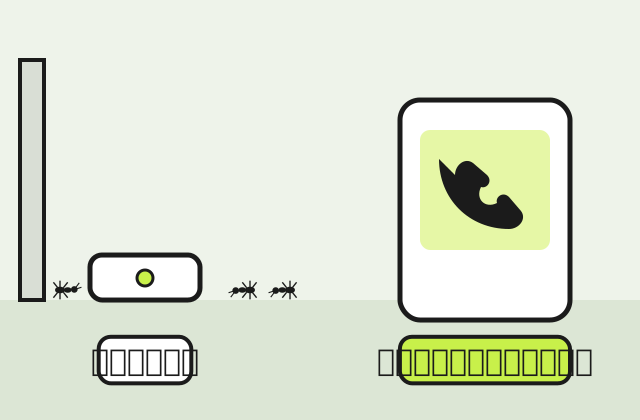
Use ant bait when you have cleaned and blocked everything but ants still come every day for more than two weeks, or you have traced the nest to inside the house. Bait works by letting worker ants carry it home to share in the nest, so it has to sit on the ant trail and you must not wipe that trail while using it. Pest control companies suit nests inside walls, fire ants around the house, or households where someone is allergic to ant stings.
Every ant bait contains an active ingredient and must be used exactly as the label says, including where to put it, how far from food, and keeping it out of reach of children and pets. This article does not give amounts or name chemicals. If unsure, ask a pharmacist or the seller, and choose products with a registration number on the label.
The most common reasons bait fails are spraying at the same time, so workers die before carrying the bait home, and putting bait right next to a food ants like more. If you use bait, remove other food from that route first, then wait for the time the label states. How to choose and place bait is explained in ant bait vs anti-ant pads.

How do you keep ants out of the house for good?
Ants will not come back if nothing they want is left where they can reach it. Four simple habits help: wash up and throw out food scraps before bed every night, use a lidded bin and change the bag daily, keep dry goods and opened snacks in rubber-sealed containers, and check door gaps, window frames and wall cracks at the start of every rainy season. If the bin is where ants keep turning up, how to wash it, tie bags and place it is in ants in the trash.
For spots where ants keep returning even after cleaning, such as the condiment corner, pet bowls and the altar shelf, use barriers that last instead of starting over each time. The manufacturer states an anti-ant pad lasts about 1 to 2 years depending on care, while gel works on table legs or shelf legs where a pad cannot go. Both need regular cleaning to work well.
After moving house or renovating, you may see more ants than usual for the first month or two, because nests around the house have been disturbed. Keep up the habits above and look at the ant lines every week. If the lines keep getting shorter, you are on the right track.
How do ants get into a high-floor condo, and where from?
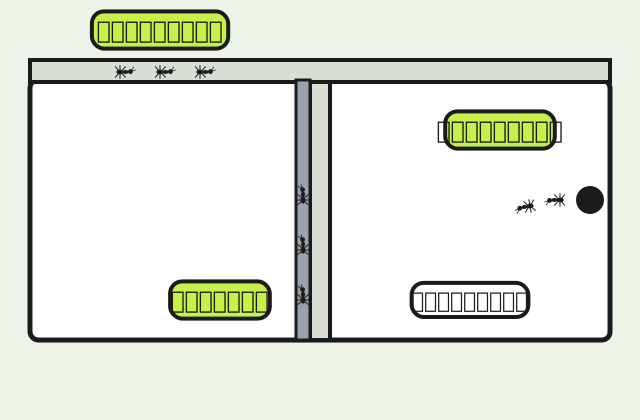
Ants can reach a high-floor unit several ways. The first is the vertical service shafts that pass every floor, carrying water supply, drainage and ventilation pipes. The second is wiring ducts and the space above the ceiling. The third is the joint between wall and floor, or skirting that continues into the next unit. Ants can follow these routes without ever leaving the building.
Some ants can nest in voids inside the building structure, where there is warmth, moisture from pipes and food scraps from many units. Another route people rarely think about is things you carry in yourself: parcels left on the lobby floor, bags of fruit and vegetables from the market and newly bought pot plants, any of which may bring ants along.
The balcony is another important entry, because it connects to the outside wall, rainwater pipes and other balconies. Ants can climb up the downpipe or wall and come in through the sliding door track. If you keep pot plants on the balcony, check the soil too, as described in ants in potted plants.
What causes so many ants in a condo?
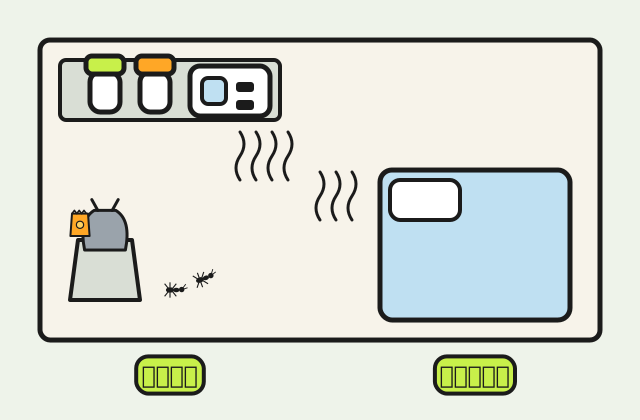
Most condo units are small, with the kitchen, dining table and bed close together, so food smells spread through the whole room quickly. Snacks eaten in bed, delivery boxes waiting to go out and a small bin that fills up fast all draw ants. Once ants find food in one spot, the trail spreads to other spots nearby in the same room.
Another reason ants in a condo show up in several units at once is change in the building: heavy rain, pipe repairs, or a neighbour doing a big clean or pest treatment, which may push ants onto new foraging routes. You cannot know for sure what caused it each time, but if neighbours report ants at the same time, the source is more likely in a shared area than in your unit.
Newly occupied units often see ants at first, because the room stood empty and suddenly has food, or the previous occupant left food residue in cabinet joints and under the sink. Do one deep clean before moving your things in, wiping inside kitchen cabinets, drawers and along the skirting with water and dish soap.
How do you find where ants get into a condo unit?
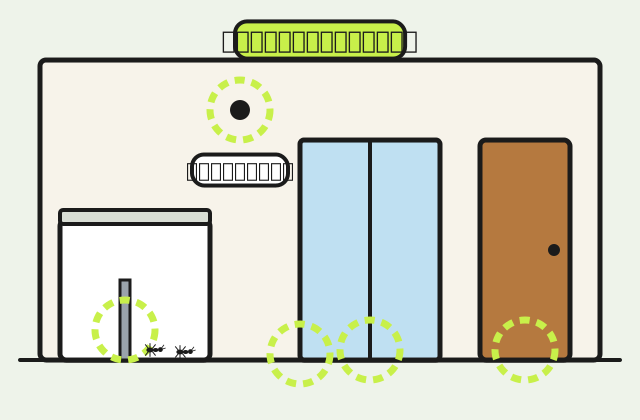
Watch the trail when ants are busiest, often in the evening or at night. Do not wipe or spray anything yet. Shine a torch along the line back to where the ants disappear, then take a photo and note the time. Photos and times help both when you fix it yourself and when you report it to building management or your landlord.
Common spots in condo units include gaps in the skirting, the pipe hole under the sink, the air conditioner refrigerant and drain pipe holes, the balcony door track, under the front door, and the covers of sockets and switches. If the trail disappears into a socket or switch, do not open it, spray it or blow anything in. Read ants in a power outlet and ask the building’s electrician.
If the trail comes from a gap that belongs to your unit, such as a small crack in the skirting or kitchen grout, you can clean and seal it within your rights as owner or with permission. If it comes from a pipe shaft, a shared wall or the corridor, building management needs to know, because fixing only your unit just pushes ants into another one.
When should you tell building management, and what should you report?
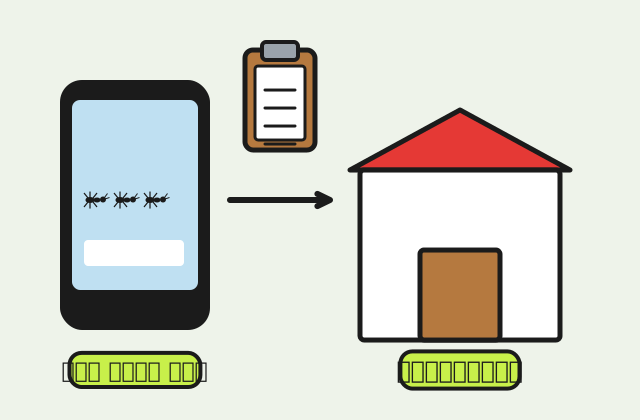
Tell building management when the ants come in through a shared part of the building, such as a pipe shaft, a wall shared with another unit, the corridor, the rubbish room or the lift, or when you learn a neighbour has ants at the same time. Management looks after common areas and usually has a building pest control schedule, so reporting early lets several units be treated together instead of chasing ants back and forth.
Report in writing through the channel the building uses, such as a form, the building app or email. Include your unit number, where you saw the trail, photos, when you saw it and what you have already done. Ask when the next common-area pest treatment is and what product is used, and mention in advance if you have pets or young children.
Do not spray or seal anything in common areas or pipe shafts yourself, even right outside your door, because they are common property under the building’s regulations and work there may affect building systems. Management responsibilities differ from building to building. If you are unsure who handles what, ask the management office directly.
If you rent, how can you deal with ants in a condo without breaking your lease?
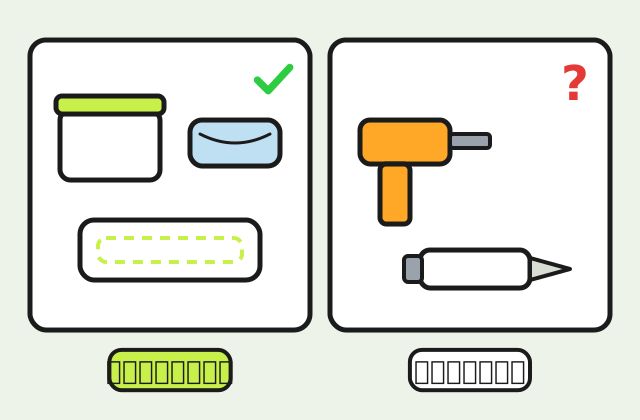
Fixes for ants in a condo that need no permission are the ones that do not change the unit: cleaning, wiping ant trails with water and dish soap, storing food in lidded boxes, taking rubbish out daily and putting food on an anti-ant pad. None of these leave marks, and they all move with you when you leave.
Drilling, applying silicone, painting over gaps, using strong tape that pulls paint off or removing skirting should be cleared with the landlord first, and some also need building management to know. Read your lease and the building rules. If you find a crack or leaking pipe letting ants in, tell the landlord in writing with photos, since it is damage to their property they should know about.
Always photograph the unit’s condition, including existing marks, when you move in. If you ever need a pest control company, agree with the landlord first on who arranges and pays, and tell building management the date and time, since many buildings set working hours and require contractors to register.
How do you set up a small condo kitchen so ants stay away?
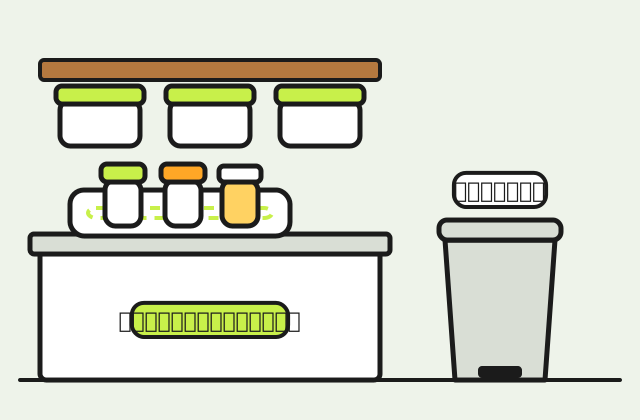
Condo kitchens have short counters and few cupboards, so things end up together on the counter. Put opened sweet and dry foods, such as sugar, coffee, snacks and cereal, in boxes with tight lids, and keep the condiments you use daily in one corner. Grouping them in one spot makes wiping easier and lets you block ants one corner at a time.
The condiment or snack corner can sit on a 30x42 cm anti-ant pad, with the bottles in the middle and at least 5 cm from the edges as the manufacturer recommends. It needs no water or spraying, which suits a small room with limited airflow. See details at anti-ant pad 30x42 cm, and how to store sugar specifically in ants in the sugar jar.
Do not put a hot kettle or very hot pot on the pad, as there is no data on heat resistance and the manufacturer advises avoiding hot items. For food waste, use a small lidded bin and take it to your floor’s rubbish room every day rather than leaving the bag outside your door. How to look after the bin is in ants in the trash.
What should you do about ants on the condo balcony and in the cat bowl?
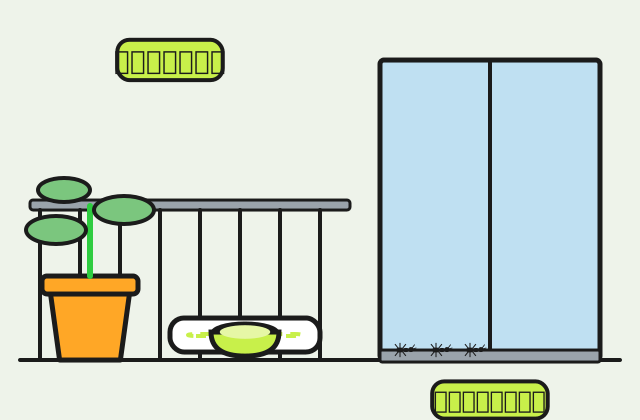
The balcony is where the unit meets the outside. Ants can walk along the building wall, the downpipe or a neighbour’s balcony. Sweep leaves and soil off the balcony often, do not stand pots against the sliding door and wipe the door track, which collects dust and crumbs. If ants follow the track inside, wipe the trail with soapy water every day until it is gone.
Cat owners in condos often put the bowl in a corner of the balcony or room, where ants find it easily because food sits there all day. Put the bowl on an anti-ant pad 5 cm from the edges, remove leftover wet food on time and do not spray near the bowl. Everything about this is covered in ants in cat food.
A balcony exposed to sun and rain is not a good place to leave a pad permanently, since the manufacturer advises avoiding strong sun and moisture. If the bowl has to be on the balcony, use a covered corner, or bring it inside during rainy spells. If a pot plant has an ant nest, move it away from the door and deal with the soil first.
When do ants in a condo need a pest control company?
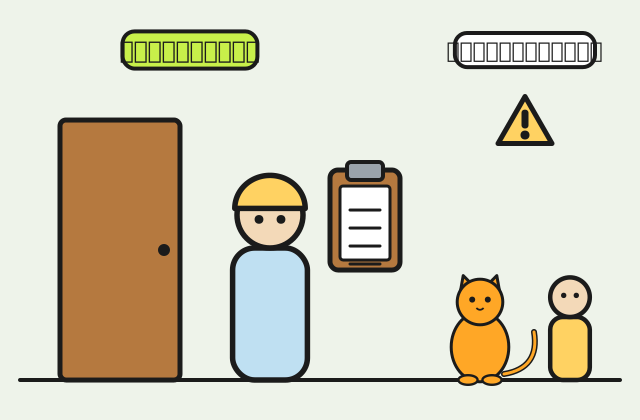
Call one when you have cleaned, sealed food away and blocked the spots ants visit, but ants keep coming from the same wall or gap, or you see winged ants coming out of a gap in the unit, which may mean a nest in the building structure, or when ants are in so many places you cannot keep up. In these cases, treating your unit alone is often not enough.
Before calling, ask building management whether there is a common-area treatment schedule and whether the building specifies contractors, times or registration. If you rent, agree with the landlord first, and ask the company what product they use, how long you need to stay out and how to store food and pet items as the label says.
For ants coming from the same nest every day, bait that workers carry back to the nest targets the source better than spraying in a room with little airflow, but it must be kept away from children and pets as the label says. How to choose between bait and blocking is in ant bait vs anti-ant pad.
Frequently asked questions about ants in the house
Are ants in the house dangerous?
Most indoor ants are not directly dangerous to people, but they contaminate food because they walk through bins and drains before reaching it. Some species, such as fire ants, sting painfully and leave bumps, and people who are allergic can react badly. If swelling is severe or breathing is difficult, see a doctor at once.
Why did ants suddenly appear in large numbers when we never had them before?
It usually happens after heavy rain, after bringing fruit or snacks home, or after neighbours renovate or spray for insects. The old nest is disturbed and the ants look for a new place. Follow the line to its source, then put food away and wipe the trail straight away.
Can I use vinegar or chalk to keep ants out of the house?
They work as a temporary help because they mask the scent trail or make walking harder, but they do not remove the nest and need redoing often. If ants keep coming to the same food, store food sealed and protect items with an anti-ant pad as well.
Does spraying ants in the house every day help?
It only kills the ants the spray hits. The nest keeps sending new ants, and spraying in the kitchen or near pet bowls risks residue on surfaces that touch food. If you must use it, follow the label and always remove food first.
Are ants in the house a good or bad omen?
It is a folk belief that people read in different ways, and there is no evidence that ants foretell luck. The causes that can be checked are ants looking for food, water or escaping a damp nest. You can keep your beliefs, but keep food sealed for hygiene.
Where in the house can I use an anti-ant pad?
Under items ants go for on a flat surface, such as pet bowls, sugar jars, rice cookers, rice bins, offerings and bins. Items must sit in the middle of the pad 5 cm from the edge, with nothing reaching from the floor or wall to touch them.
Why are there ants in a brand-new condo?
New buildings have pipe shafts and joints ants can use just like old ones, and as residents move in, food and rubbish in the building increase quickly, so ants living around the site follow. Keep food in your unit sealed and tell building management if you see ants coming in from a common area.
Can ants come from the unit next door?
Yes. Ants follow wall joints, skirting and pipe shafts that connect units. If the trail disappears into the wall shared with another unit, talk politely with your neighbour or ask building management to help. Do not assume the neighbour is dirty, because the source may be inside the shared wall.
Can I use ant spray inside my condo unit?
Condo units are often closed up with little airflow, so spray mist lingers longer than in an open house, and it only kills the ants it touches. If you must use it, follow the label on ventilation and keep it away from food, children and pets. The long-term fix is still removing food and blocking entries.
What about ants on the bed in a condo?
Studios where the bed is near the kitchen get this a lot. Stop eating snacks in bed, wash the bedding, move the bed away from any wall with an ant trail and empty the bedroom bin daily. The full method is in ants in bed.
Can I seal gaps with silicone myself?
If you own the unit and the gap is inside it, you can within the building rules. If you rent, ask the landlord first. Gaps around shared pipes, service shafts or walls shared with other units should be reported to building management, as they may need specific materials and access points should not be sealed.
Is building management responsible for ants?
It depends on each building’s regulations. Generally management looks after common areas and common property, while the inside of a unit belongs to its owner. If ants come from a common area, a report with evidence helps management deal with it. If you are unsure of rights and duties, ask the management office for the building regulations.