Ants in the bathroom: where they come from when there is no food, and how to stop them
 KAI67 anti-ant pad, large 30x42 cm฿148 · 1 pad · Order via LINE or fill in the form
Order ฿148LINE @814ddrza
Swipe for the next topic · 9 topics
Where do ants in the bathroom come from?
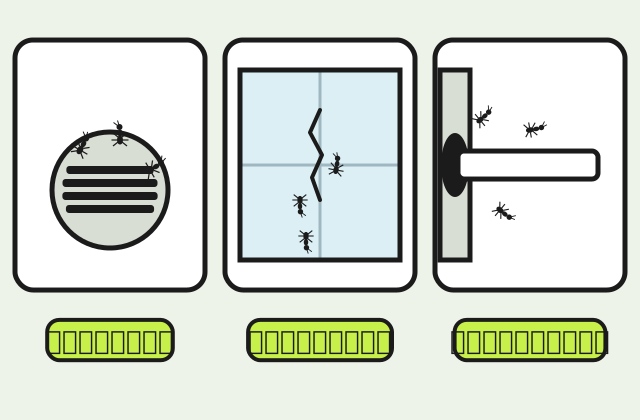
Ants in the bathroom usually come from a nest outside the room, in the soil around the house, inside a wall cavity or under the floor, and walk in along routes that already exist. A bathroom has more openings than most rooms: the floor drain, the waste pipe under the basin, supply pipes through the wall, the extractor fan opening and louvred window frames. That makes it an easy room for ants to pass through or stop in.
To find out where they come from, wait until they are walking in a clear line and follow it back. Do not wipe or spray it first, or the line breaks up and you lose the trail. If it ends at the drain cover, they are coming up the pipe. If it ends at cracked grout or a crack in a corner, they are in the wall or under the floor. If it ends at the window, they are walking in from outside.
Ground-floor bathrooms next to a garden or a row of trees tend to get ants through the window and outside pipe openings. Upstairs bathrooms and condo bathrooms more often get ants along pipe shafts shared with other units. If you live in a high-rise and the ants come from a shared shaft, what to report to the building management is covered in ants in a condo.
Why do ants come into a bathroom when there is no food?
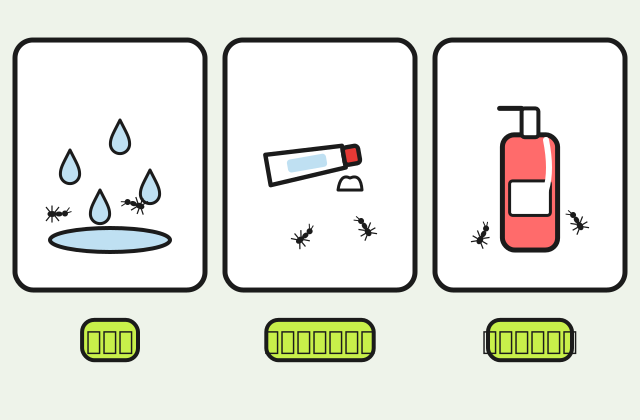
Because ants need water as well as food, especially in hot weather or the dry season when water outside is scarce. A bathroom has water on the floor, on the basin edge and around the taps almost all the time, so worker ants come in to collect it for the nest. There are also residues with sugar or fat in them, such as sweet-flavoured toothpaste, lip balm, lotion and mouthwash.
Ants are social insects that send workers out to find both food and water for the whole colony. Background on ant behaviour is available at Ant (Wikipedia). Once the first ant finds water or a sweet smear in the bathroom, it leaves a scent trail on the floor and others follow it in a line over the next days, even if nobody ever eats in the bathroom.
Something people often miss is what gets carried into the bathroom: a coffee or sweet drink left on the basin edge, baby bottles rinsed in the sink, snacks children eat during bath time. Tiny crumbs that fall into damp floor grooves become sticky and stay there for a long time. Small insects that die in the bathroom, such as flying termites drawn to the light in the evening, are also protein that some ants carry back to the nest.
How do ants get into the bathroom, and which spots should you check?
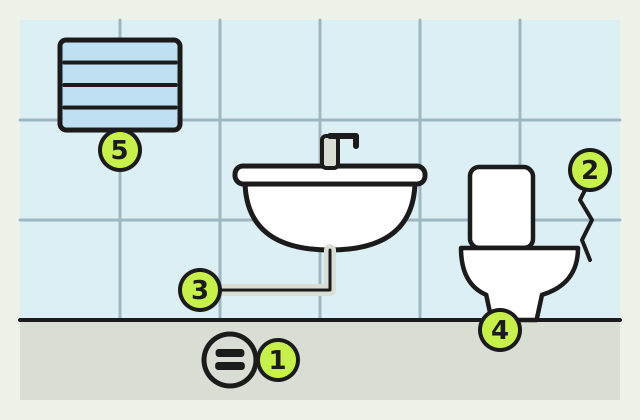
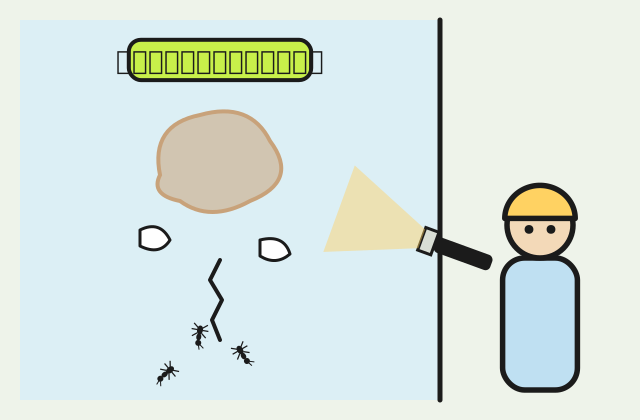
There are five common entry points: the floor drain cover, cracked or missing grout, the gap around the pipe under the basin where it enters the wall, the joint around the toilet base, and the window frame or extractor fan opening. Take a torch and check each one at a time when ants are most active. The spot where ants keep going in and out is the main route.
An open grid drain cover is the easiest way in, because the holes are large and level with the floor. Missing grout shows up as a dark line or small holes along the corners. Sometimes ants carry soil or fine cement dust out and leave it in a small pile beside a crack. If you see fine powder piled along a joint, suspect a nest under the floor at that spot.
The gap around the pipe under the basin often has no cover plate, or the plate has fallen off, because the hole was drilled wider than the pipe and never filled. Around the toilet base, cracked sealant can let water seep underneath, which draws ants and other insects. If ants regularly come out from under the toilet, have a plumber check for a leak. Do not remove or shift the toilet yourself.
Are ants in the bathroom a sign of a leak or hidden damp?
Ants in the bathroom that keep coming even after the room is dry can be a sign of moisture building up in the wall or under the floor: a supply pipe leaking inside the wall, missing grout letting water get under the tiles, or a failing waterproof layer under the bathroom floor. Damp that stays for a long time can lead some ants to move their nest nearby, because water is always available.
Signs to look for together are bubbling or peeling paint near the bathroom, round water stains on the wall of the next room or on the ceiling below, floor tiles that sound hollow when tapped, and a musty smell that stays even with the fan on. If you see these along with ants coming from the same crack, the main problem is the leak, and getting rid of the ants alone will not solve it.
In that case, have a plumber or a home repair technician find the leak first. Opening tiles or repairing pipes inside the wall is a job for a technician, and we do not recommend chiselling or drilling the wall yourself. Once the repair is done and the wall dries out, ants often drop off by themselves because the water source is gone. Then re-grout and wipe the ant trail using the steps in the next section.
How do you clean so that ants in the bathroom go away?
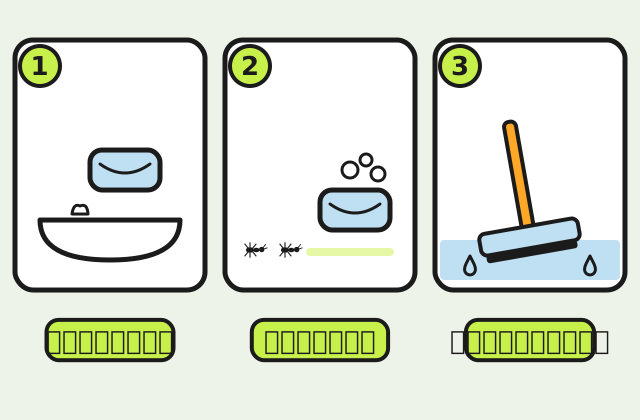
Start by removing what ants can eat. Wipe toothpaste off the basin edge and the tube, rinse the bottoms of soap, shampoo and lotion bottles that have sticky drips, and wipe the shelves clean. Then wipe the whole length of the ant route with a cloth dipped in water and dish soap, from where the ants come out to where they gather, to remove the scent trail they left behind.
Next, help the room dry faster after use. Squeegee the floor towards the drain, wipe the basin edge and around the taps, and run the extractor fan or open the window for a while. A room that dries within a few hours offers far less water. A bath mat that is always wet should be hung to dry or changed more often.
While cleaning, never mix products, especially bleach with acidic or ammonia-based bathroom cleaners, because this can release a dangerous gas. Use one product at a time and always read the label. If you want to wipe the ant trail with vinegar, its pros, cons and the surfaces to avoid are explained in vinegar for ants.
How do the bin and toiletries on the shelf draw ants into the bathroom?
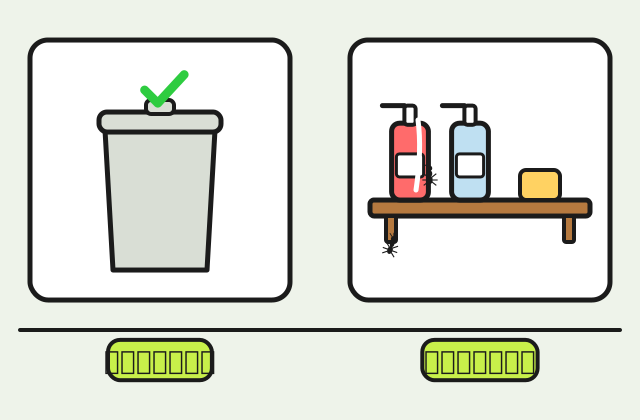
A bathroom bin holds tissues with lotion, lipstick or toothpaste on them, and used sanitary products, which are both damp and organic, so ants can follow the smell. If the bin has no lid and the bag is changed once a week, ants have a regular stop. Use a bin with a lid, wrap soiled waste before throwing it away, and change the bag every one to two days while ants are around.
Do not use the bathroom bin for sweet drink cups, milk cartons or snack wrappers. Take those to the kitchen bin, which you already manage for food waste. If the bin is where ants keep coming, how to wash it, tie bags and place it away from the wall is covered in detail in ants in the trash.
On the shelf, ants go for bottles with drips running down the side, lotion pump heads with dried cream, lip balm, and bar soap left sitting in water in a soap dish. Wipe bottle necks and pump heads whenever you see residue, switch to a soap dish with drainage holes, and move sweet-scented cosmetics into a lidded box or to a drier room.
Can you use anti-ant pads, gel or spray for ants in the bathroom?
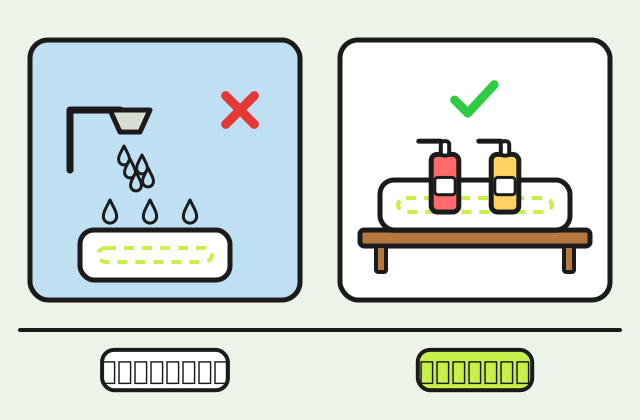
An anti-ant pad is not the main option for a bathroom, because the manufacturer advises avoiding damp and wiping the pad dry, so a floor or basin edge that is always wet is not suitable. It can work on a shelf in the dry zone, such as a lotion shelf or a cosmetics basket away from the shower, with items placed in the middle and 5 cm from the edge. Size and price are on the 30x42 cm anti-ant pad page.
Anti-ant gel can be applied to vertical surfaces such as shelf legs, but the seller has no confirmed data yet on how long it holds up to water, so it should not go where it gets splashed or mopped often. If you use it, pick shelf legs outside the wet zone and apply it on a fully dry surface. Details are on the anti-ant gel page.
Insect spray only kills the ants it hits, and a bathroom is a small closed room with limited ventilation, so do not spray while people are using it. Never spray into the drain or onto toothbrushes and towels. If you must use one, use a registered product and follow the label exactly. What works better long-term is keeping the room dry and sealing the entry points.
How can you seal the bathroom against ants, and when should you call someone?
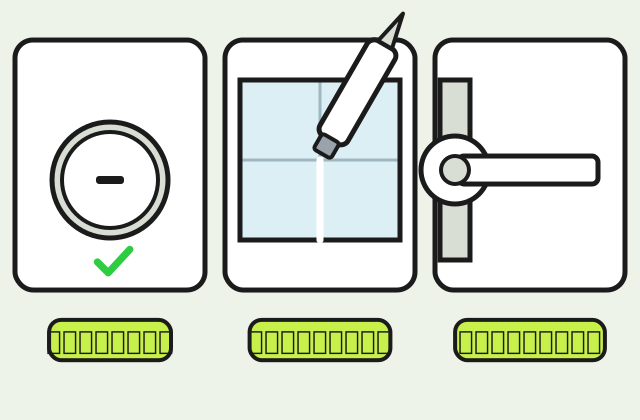
What you can do yourself: replace the floor drain cover with one that closes or has a finer grid, fit a cover plate around the pipe under the basin to close the hole in the wall, and re-grout short sections of missing grout with ready-mixed grout or bathroom silicone. Always wipe the ant trail first and let the joint dry completely before filling it, or the material will not stick.
For a floor drain that is rarely used, such as in a guest bathroom, run some water into it from time to time. Drains with a trap hold water that blocks smells and insects coming up from the pipe, and if it dries out, both come up more easily. Pouring boiling water down the drain to kill ants is not recommended, because most household PVC pipes are not designed for very hot water.
Call a technician when grout is missing along long stretches or tiles are lifting, when water seeps from under the toilet, when the pipe gap is deep inside the wall out of reach, or when ants keep coming from the same spot for weeks. If the leak has been fixed and ants still come, ant bait that workers carry back to the nest is more targeted than spray. The principle is explained in ant bait vs anti-ant pads.
Frequently asked questions about ants in the bathroom
Ants got on my toothbrush. Do I need to throw it away?
If a few ants walked over it, rinse it with clean water and let it dry, and use it again if you are comfortable doing so. If lots of ants got into the bristles, replace it, move the toothbrush cup somewhere dry and wipe the toothpaste residue from the bottom of the cup every day, because that residue is what draws the ants.
Tiny ants are walking on the bathroom tiles. What kind are they?
Small ants in bathrooms can be several species and are hard to identify by eye. The first steps are the same either way: keep the room dry and seal entry points. To learn how small black and small orange-brown ants at home differ, read small ants in the house.
Does pouring bathroom cleaner down the drain every day keep ants away?
It removes some residue and smell in the pipe, but it does not close the entry point, and some cleaners corrode pipes or grout if used more often than the label says. A drain cover that closes, running water into rarely used drains and filling gaps around pipes works better.
Ants in a condo bathroom: should I tell the building management?
Yes, if they come from a pipe shaft or wall gap shared with other units or common areas, because the source is outside your unit and you cannot solve it alone. Take photos of where they come out, note the dates and times and report it all together. In a rented unit, tell the owner before sealing or drilling anything.
The bathroom is dry now, so why are there still ants in it?
Common reasons are that the old trail still smells because it was not wiped along its whole length, that sweet residue remains on a shelf or in the bin, or that there is a hidden leak in the wall. Wipe the trail again, check toiletries one by one and look for the signs of damp described above.
Can I sprinkle ant chalk or powder on the bathroom floor?
Not recommended. A bathroom floor gets wet often, and powder turns into a slippery paste that is hard to clean. Insecticide chalk also contains chemicals, must be used according to the label and kept away from children. To block ant routes, seal the gaps and keep the floor dry instead.