How to keep ants away: every method for the home, what to use where, and the pros and cons of each
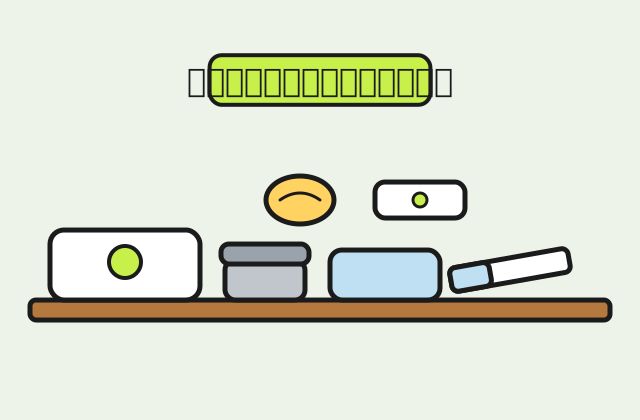
 KAI67 anti-ant pad, large 30x42 cm฿148 · 1 pad · Order via LINE or fill in the form
Order ฿148LINE @814ddrza
Swipe for the next topic · 12 topics
How many ways are there to keep ants away, and how does each work?
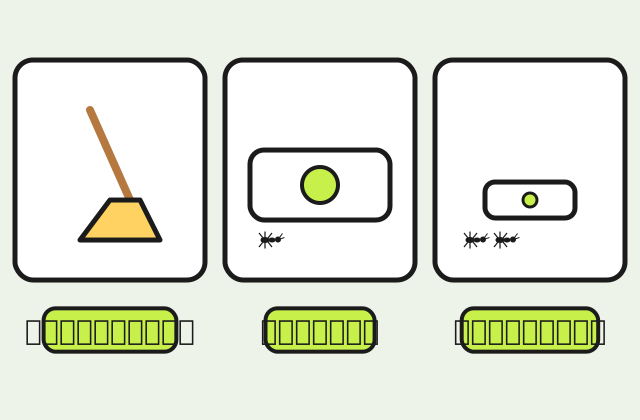
Ways to keep ants out fall into three types by job. The first leaves nothing in the house to draw ants: wipe the ant trails and put food away. The second stops ants reaching an item with a barrier, such as an anti-ant pad, gel, a water tray or sealing the cracks they use. The third reduces ants at the source, with bait that ants carry back to the nest or with a pest control company.
The first two types do not kill ants, so they are fine near food, pet bowls and altar shelves, but they need keeping up because the nest is still there. The third type reduces ants more, but contains active ingredients, must follow the label, and needs care around children and pets. The most common mistake is skipping straight to type three. One batch of ants dies, the food residue is still there, and a new batch arrives.
For background on ant behaviour and colonies, see the Wikipedia article on ants. In Thailand, household insecticides must carry a registration number on the label. Before buying any product, check that the label is in Thai and gives directions, warnings and first-aid advice.
Before buying anything, how do you start working out how to keep ants away?
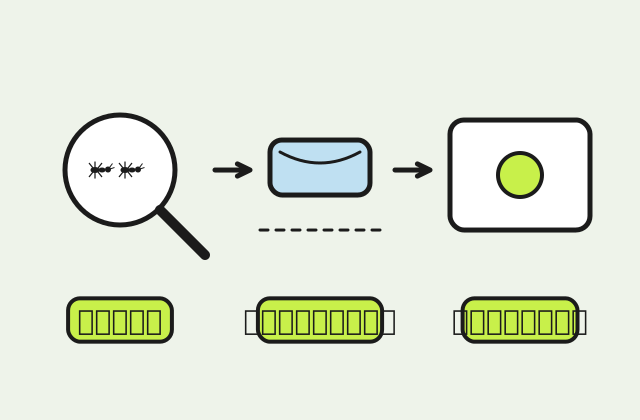
Start by working out what the ants are after and which way they come, before buying any equipment. Follow the ant line back to its way in, then wipe the whole trail with water and dish soap to remove the scent. Next, seal away whatever the ants came for. This step costs nothing and cuts ants the most. Barrier tools work far better once it is done.
If you do not yet know where ants get in, or ants appear in several places at once, first read how to track ants and tackle one room at a time in ants in the house. It helps you pick a method that fits the spot instead of buying everything to try at once.
Jot down where ants show up, at what time, and what kind of food they go for, sweet or greasy. After trying a method for 3 to 7 days, check whether the ant line is shorter. A method that is not working shows up clearly in these notes, with no guessing.
How does an anti-ant pad keep ants off, and where does it fit best?
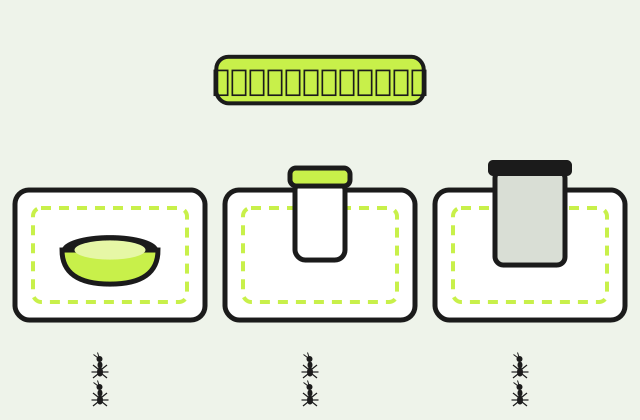
An anti-ant pad is a rigid plastic sheet with a coated surface that ants will not walk across. It goes under items on a flat surface, such as pet bowls, sugar jars, rice cookers, rice bins, offerings and bins. The conditions are that the item sits in the middle 5 cm from the edge, the pad stays clean, and nothing reaches from the floor or wall to touch the item. The mechanism is explained in what is an anti-ant pad.
The upside is no water to top up, nothing to spray, and it can be reused for a long time; the manufacturer states about 1 to 2 years depending on care. The downside is that it only protects what is on the pad, not the whole room, it cannot go on table legs or walls, and some homes wait 1 to 3 days for ants to abandon the old route. If ants still get through, see the common causes in does an anti-ant pad work.
The KAI67 30x42 cm pad costs ฿148 and leaves about 20x32 cm of usable space after the margin; the 24x32 cm size at ฿140 suits a single bowl. If you are comparing with other brands, see the criteria in which anti-ant pad to choose.
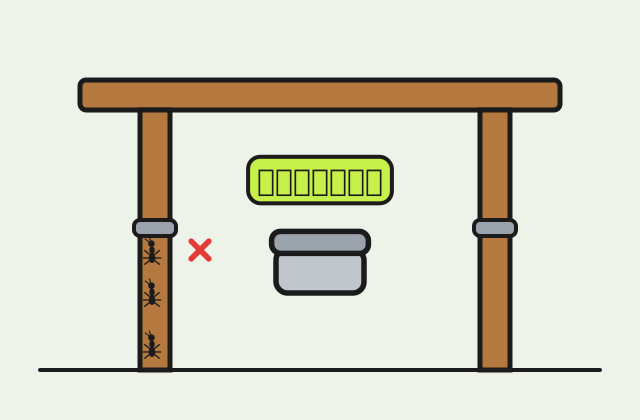
Where is anti-ant gel used, and how is it different from a pad?
Anti-ant gel is for spots where a pad cannot go: table legs, chair legs, shelf legs, the bottom edge of food cupboards and around cable or pipe holes in walls. Apply it as a complete ring on a dry surface, with no gap for ants to slip through. A pad protects items on a flat surface, while gel blocks routes on vertical surfaces, so the two work well together.
KAI67 anti-ant gel costs ฿109 in an aluminium jar. We have not yet received the ingredient list, net amount or shelf life from the distributor, so we cannot confirm its safety with children and pets. In homes with young children or pets that lick things, apply it only on high spots out of reach for now.
The gel line wears thin or breaks when wiped or splashed with water. Check it now and then, and if it looks faded, apply more over the same line. One example of using pad and gel together is a pad under the dishes on the table and gel around all four table legs.
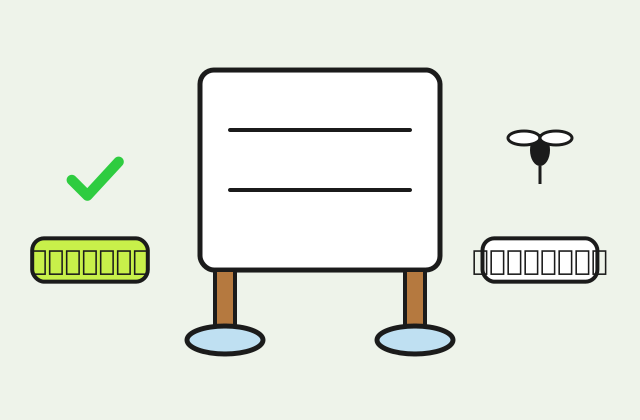
Do water trays under table legs and moat bowls still work well?
Water trays still work well and show results from day one, because most ants cannot cross water. They suit food cupboard legs, table legs where food is set out, and moat-style pet bowls. The downsides are refilling every day, standing water breeding mosquitoes, and dust, pet hair or leaves floating on the surface giving ants a bridge across.
To make water trays work, change the water daily instead of topping it up, check that the legs do not touch the rim of the cup, and make sure no part of the cupboard leans on a wall, curtain or cable. If you live near water or have lots of mosquitoes, gel round the cupboard legs may be the better choice.
In homes with a heavy ant problem in the first week, many people use water trays as a temporary barrier while waiting for an anti-ant pad to take effect, then remove the trays. A detailed comparison of water trays and pads is in how to use an anti-ant pad.
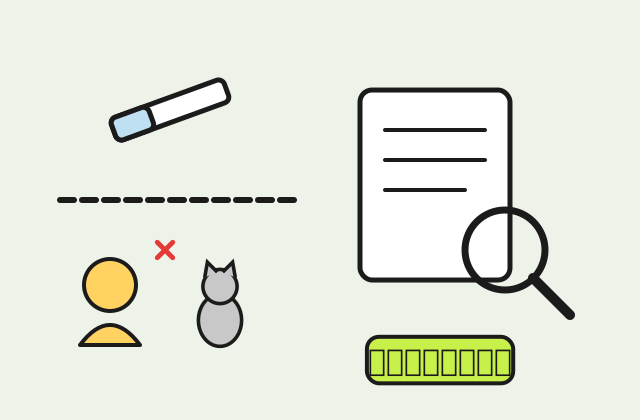
Are ant chalk and ant powder safe?
It depends on each brand’s ingredients. Many ant chalks and powders contain insecticide, not just plain chalk, so they must be used as the label says. Never draw lines on food prep areas, near pet bowls or where babies crawl, and keep them out of children’s reach, because they look like blackboard chalk or sweets.
Chalk is cheap and easy to draw along door gaps or window frames. The downsides are that lines break easily when wiped or wet, the powder sticks to feet and pets and spreads through the house, and if you draw a line without fixing the cause, ants simply find a way round it.
If you use it, pick a product with a Thai label and a registration number, read the warnings about children and pets first, draw only where people and animals do not touch, such as the outside edge of the back door, and wash your hands afterwards.
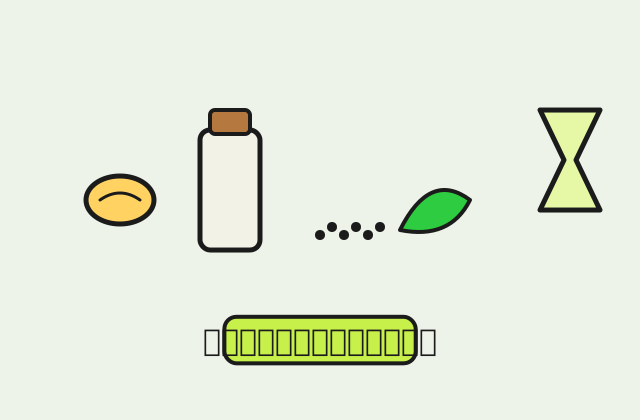
Natural remedies: are they a real way to keep ants away?
Natural remedies such as vinegar, lemon peel, pepper, cinnamon or bay leaves mostly work by masking or disrupting the ants’ scent trail for a while. Some homes see ants avoid the spot, others see almost no effect, and nearly all need redoing as the smell fades. They work best as a helper after wiping the trail, not as the main method for a spot ants visit every day.
The upside is that you have them in the kitchen and they contain no insecticide. The catch is that natural does not always mean safe for everyone. Vinegar can etch marble or natural stone, some essential oils are not suitable near cats and other pets, and spice powder left sprinkled around becomes a mess you have to clean. How well vinegar works, where to use it and what never to mix it with is in vinegar for ants.
Water with dish soap for wiping the ant trail is the best-value natural method, because it removes the scent trail right where it is and cleans up food residue at the same time. If you try other remedies, try one at a time and note the result, so you know what actually works on the ants in your home. Each remedy, with cautions for cats and stone floors, is covered in natural ant repellent.
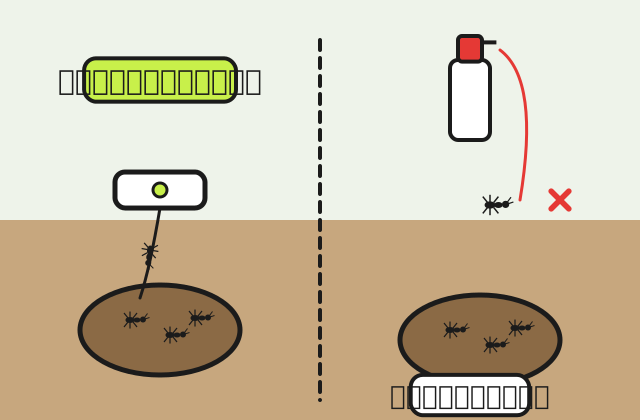
How do ant bait and spray differ, and when should you use them?
Spray only kills the ants the mist reaches. The nest stays and keeps sending out new ants. Ant bait is designed for worker ants to eat and carry back to share in the nest, so it reduces ants at the source more, but takes time. Use bait when you have cleaned and blocked everything and ants still come daily, and keep spray for when it is really needed, outdoors, away from food, following the label. Choosing between herbal and chemical sprays, and where never to spray, is covered in ant repellent spray.
Bait fails when it is used together with spray, or when the trail is wiped right where the bait sits, because workers die or lose the bait before carrying it home. It also fails when placed next to a food ants prefer. Move other food away from that route first, then place bait along the ant trail, away from food preparation areas.
Bait and anti-ant pads can be used together because they do different jobs. The pad protects the item you want to keep ant-free, and the bait sits further away along the ant trail on the floor. For amounts, active ingredients and how long to wait, follow that product’s label only. Whether bait really kills the colony and where never to place it is covered in ant bait vs anti-ant pads.
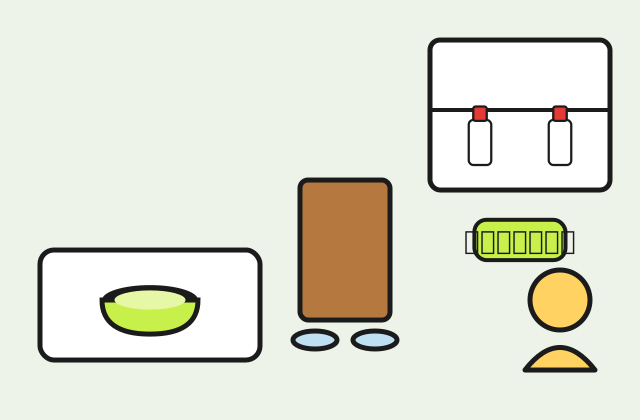
With young children or pets at home, how should you keep ants out safely?
For how to keep ants away safely, homes with young children or pets should rely mainly on methods with no active ingredients: wipe the ant trail, store food sealed, and protect items with an anti-ant pad or water tray. Babies crawl and put their hands in their mouths, and cats and dogs lick their paws, so residue on the floor gets swallowed easily. If you must use bait or spray, only use it where children and animals cannot reach, following the label warnings.
Even anti-ant pads should be used with care. Keep the bowl in the middle so food does not touch the pad surface, wipe off food daily, and do not let pets lick the pad regularly. We are still waiting for the surface coating document from the manufacturer; details are in is an anti-ant pad safe.
The corner that needs the most care is the cat and dog feeding spot, which is where ants appear most in homes with pets. Advice on food ants got into, storing the food bag and choosing bowls is in ants in cat food.
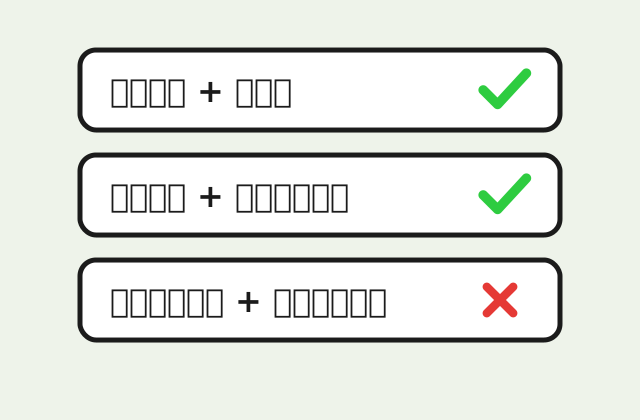
Using several ant methods at once: how do you stop them cancelling out?
The rule is to keep the jobs separate. Barrier methods protect the items you care about; nest methods go on ant trails further away. Pairs that work well include a pad with gel on the table legs, and a pad with bait placed away from food. Pairs that cancel out are spray with bait, and sprinkling strong smells or wiping the trail right where you just placed bait.
Another pair to watch is strong cleaners or spray on the anti-ant pad, which may leave a film on the surface. Only wipe the pad with a damp cloth and dry it, as the manufacturer advises. And do not put a water tray under the pad or the pad under a water tray, because spilled water wets the pad and leaves marks.
An order that works for most homes: in week one, wipe the trails and store food away, put pads or gel at the main spots, and watch for 7 days. If the ant line is as long as before, then add bait along the ant trail on the floor.
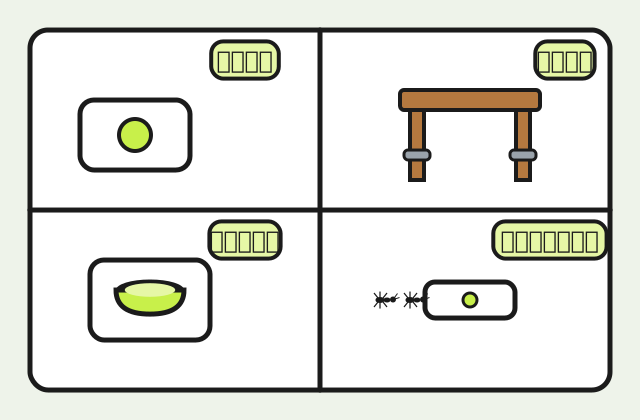
Room by room: how to keep ants away with the right tool for each spot?
Choose the method by the kind of spot. Items on a flat surface, such as pet bowls, sugar jars, rice cookers and offerings, suit an anti-ant pad. Table, cupboard and shelf legs suit gel or water trays. Door gaps and wall cracks need sealing. Ant trails outdoors or nests in walls call for bait or a pest control company. And every spot starts with wiping the ant trail.
In bedrooms and at desks the focus is not eating there and clearing away sweet drinks. For electrical devices such as laptops, never use spray or liquid; follow ants in the laptop. The kitchen condiment corner also has sweet residue to deal with; see an example setup in ants in the sugar jar.
The altar shelf is a place for no chemicals at all: take sweet offerings down promptly, remove the bridges ants use to climb up, and stand offerings on a pad, as described in ants on the Buddha shelf. If you have done everything at every spot and nothing improves in 2 weeks, the nest is very close and needs dealing with directly.
Frequently asked questions about how to keep ants away
Which method keeps ants away fastest?
A water tray or moat bowl works from day one, because ants cannot cross water. The manufacturer states anti-ant pads show results within 24 to 72 hours. Wiping the ant trail and storing food away is what makes every method work faster.
Is there a permanent way to keep ants away?
No single method is permanent, because nests around the house remain and ants forage every day. The closest you can get is leaving no food or water ants can reach, sealing the entry points, and using long-lasting barriers at spots ants keep returning to.
Anti-ant pad or anti-ant gel: which should I buy first?
It depends on where the ants are. For items on a flat surface such as pet bowls or sugar jars, start with a pad. If ants climb table or shelf legs to reach several items, start with gel. Many homes use both at their main spots.
How long does vinegar keep ants away?
There is no confirmed figure, because it depends on strength, surface and airflow. It usually needs wiping again once the smell fades, and it is best avoided on marble or natural stone, which acid can etch.
I have tried several ways to keep ants away and they are still here: what now?
Look for the ant source again, because the nest may be inside a wall, under the floor or in an indoor pot plant. If you find it, use bait as the label directs. If you cannot find it, or the ants bite, contact a licensed pest control company.
How do I order KAI67 anti-ant pads and gel?
Order via LINE @814ddrza or the order button on the product page. The 30x42 cm pad is ฿148 and the gel is ฿109. Shipping is charged at cost, and the admin confirms the total before you pay.