Ants in rice: why it happens, how to get the ants out, and how to store rice so ants cannot get in
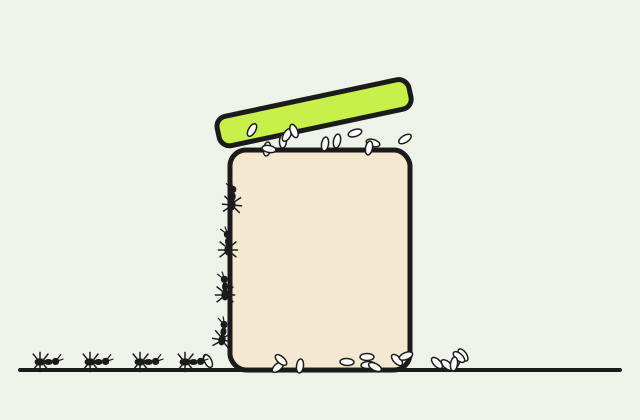
 KAI67 anti-ant pad, large 30x42 cm฿148 · 1 pad · Order via LINE or fill in the form
Order ฿148LINE @814ddrza
Swipe for the next topic · 18 topics
Why are there ants in rice?
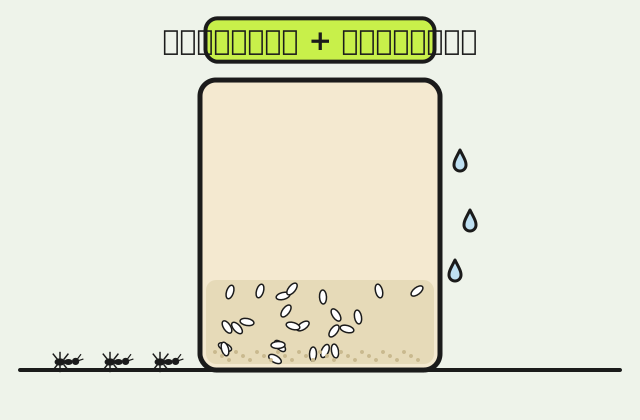
Ants get into rice because there is food and a way in. Uncooked rice is mostly starch, and the dust and broken grains at the bottom of the bag or around the bin base are easy for ants to carry off. When the bin sits in a damp kitchen corner or near the sink, ants out looking for food and water find it first, then leave a scent trail for others to follow in a line.
The things that most often let ants reach the rice are a bag with a cut corner folded over, a plastic bin without a rubber seal on the lid, and a measuring cup left inside the bin or on its lid. And if weevils or grubs are already in the bin, some insect-eating ants may follow them too. Checking whether there are only ants or other insects as well matters before choosing a fix.
A rice bin on the floor against the wall is the easiest for ants to reach, because the joint between floor and wall is a main ant route in the kitchen. Moving the bin onto a shelf or onto a barrier means ants have further to walk and hit an obstacle before the rice.
Ants in rice or weevils: how do they differ?
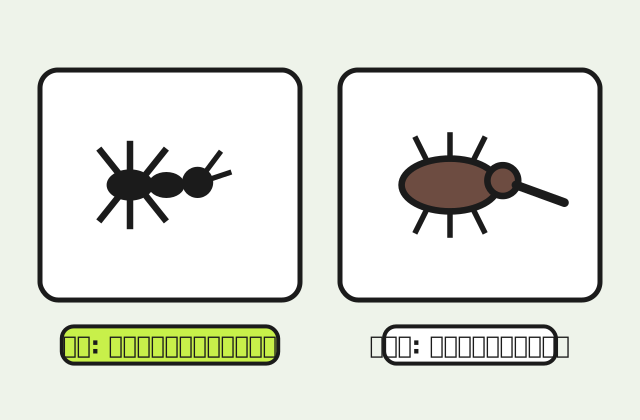
Ants and weevils are different insects and need different fixes. Ants have a clearly pinched waist and bent antennae, and walk in lines in and out of the rice bin because their nest is outside. Rice weevils are small dark brown beetles with a long snout that live and lay eggs inside the grains, so you find them scattered through the bin rather than in a line, often with holes in the grains or powdery rice.
If it is ants, fix the entry route and the container. If it is weevils, the problem is inside the rice itself; they are harder to separate out, and you usually need to think about the quality of the remaining rice as well. For background on this beetle, see the Wikipedia article on the rice weevil.
Some homes find both at once. Deal with the weevils first, because while insects remain in the rice, ants still have a reason to come back. Then change the container and block the ant route as in the following sections.
Found ants in rice: how do you get them out?
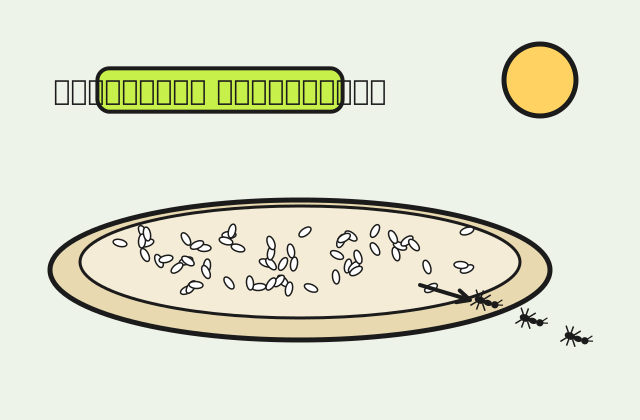
Tip the rice onto a pale tray or flat basket in a thin layer and put it somewhere open and bright. Ants prefer dark, narrow spaces; with the rice spread out and nowhere to hide, most ants walk out on their own before long. While you wait, gently shake or sift the tray now and then and remove the ants that gather at the edge. No chemicals touch the rice.
Many people put the tray in mild sunlight, which helps ants leave faster, but do not leave it until the rice is very hot, and let it cool to room temperature before tipping it back into the container. If you store it while warm, vapour condenses into drops inside the bin, which makes the rice damp and can lead to mould. Cover it with a thin cloth against dust and birds.
While the rice is on the tray, wash the bin with dish soap, clean the lid seal and let it dry completely, and wipe the floor along the ant route all the way to its source. If you do not wipe the trail, new ants will follow the old scent back to the bin within a day.
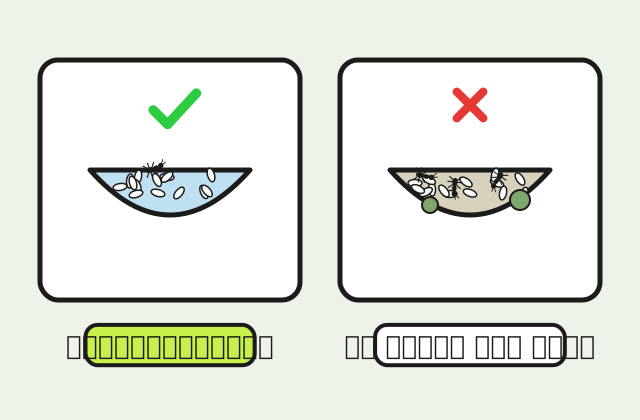
Is rice with ants in it still OK to cook?
If there are only a few ants and the rice is still dry with no odd smell, many households remove the ants and rinse the rice as usual before cooking, and any remaining ants float off with the rinse water. But if there are lots of ants, dead ants mixed throughout, clumped damp rice, mould spots, a musty smell, or it has been sprayed with insecticide, throw it all away.
The reason for care is that ants walk over floors, bins and drains before reaching the rice bin, so they may bring dirt with them. Rinsing removes some of what is on the surface, but does not help with mouldy rice or chemical residue. Mouldy rice should not be cooked even if you pick out the mouldy part.
If your household includes young children, older people or anyone with weakened immunity, and you are not sure about the rice, throwing out that bag and starting again in a sealed container is the safer choice. Rice costs far less than the risk that follows.
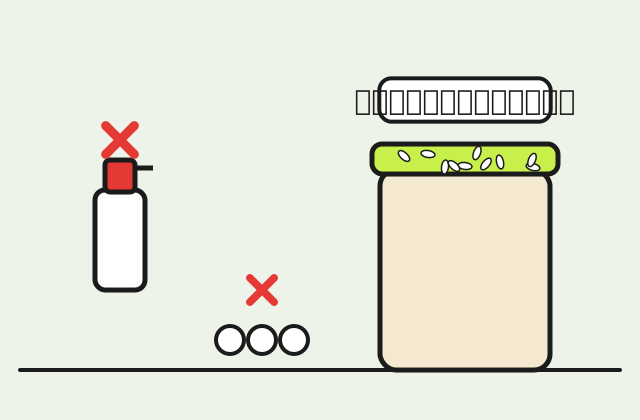
With ants in rice, what should you not do?
Never spray insecticide into or around the rice bin, and never put mothballs or any insect repellent not made for food into uncooked rice, because these chemicals give off vapour and can soak into the grains. Rinsing does not remove what has soaked in. Most spray labels already say to remove food before spraying.
Also avoid pouring boiling water or floor cleaner on an ant line right next to the rice bin, because steam and cleaner smell can get into the bin. And do not put rice that still has ants walking in it into the fridge or freezer mixed with other food without a separate container.
If kitchen ants are so bad that you really need an insecticide, first move rice and dry goods out of that area, use enclosed bait stations along the ant trail on the floor away from food storage, and follow every point on the label. These methods are compared in how to keep ants away.
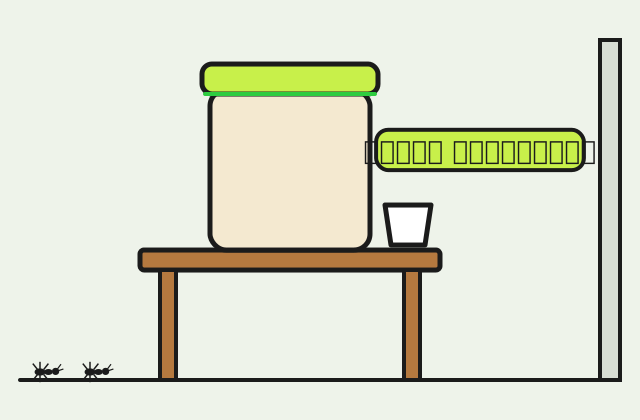
How should you store rice so ants cannot get in?
Store rice in a container whose lid has a rubber seal all round, such as a clip-lid rice bin, a vacuum box or a screw-top jar with a seal, and raise it off the floor onto a shelf that does not touch the wall. Keep the measuring cup outside, and wipe rice dust from the rim each time you scoop. Split large bags into smaller containers you will use up in 2 to 4 weeks.
An easy test: close the lid and shine a light along the seam. If you can see light through it, small ants can get through too. Replace seals that have gone hard or come loose. Dispenser-style rice bins have one more spot to check, the outlet at the bottom, which often holds rice dust and becomes an ant entry.
Wash the rice bin and let it dry every time before adding new rice. Do not tip new rice on top of old rice at the bottom, because the dust and broken grains that build up there draw both ants and weevils. The same idea applies to sugar jars and condiments; see more in ants in the sugar jar.
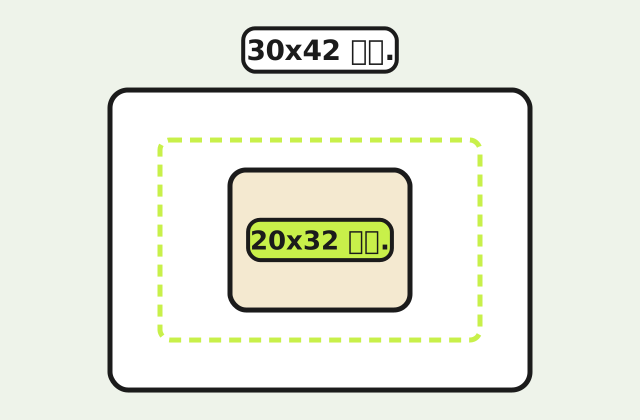
Can you stand a rice bin on an anti-ant pad, and what should you check?
Yes, if the bin base is small enough to leave 5 cm of pad on every side. The 30x42 cm anti-ant pad at ฿148 has about 20x32 cm of usable space after the margin, which suits tall, narrow rice bins, small rice boxes, or 2 to 3 rice jars. Measure the bin base before ordering. If it is larger, the pad will not have enough margin to work.
Large cabinet-style rice bins on the floor often have a base wider than the pad. In that case use another approach, such as raising the bin onto a shelf with legs, then applying gel around the shelf legs or standing the legs in cups of water. That blocks ants from the whole shelf, not just one bin.
Before placing it, rinse the pad with plain water and dry it. Put the bin in the middle of the pad, away from the wall, and wipe up grains spilled on the pad after each scoop. The manufacturer states results within 24 to 72 hours, so at first, put it down and do not keep moving it.
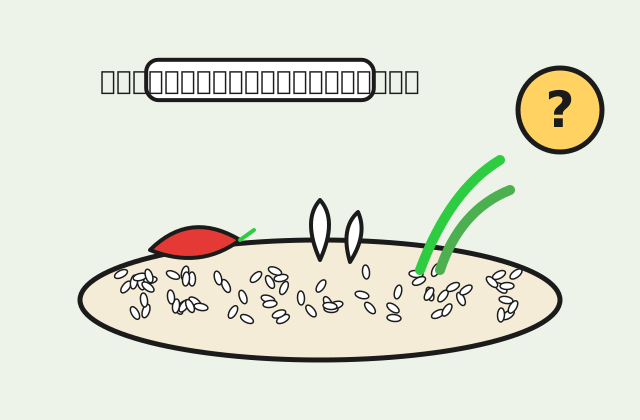
Do dried chillies, garlic or pandan leaves in rice really keep ants out?
There is no reliable evidence that dried chillies, garlic or pandan leaves in uncooked rice keep ants away. These folk remedies are mostly passed on as ways to keep weevils out, and results people report vary a lot. For ants, a tightly sealed container and a blocked route are far more dependable, because ants walk in from outside rather than breeding in the rice.
If you want to use a folk remedy as well, use completely dry, clean items in a cloth bag or wrapped in muslin separate from the rice, and replace them regularly. Anything damp or mouldy makes the whole bin damp. Fresh pandan leaves are therefore not suited to being left in the rice bin for long, and chilli or garlic smell may transfer to the rice, which some households dislike.
What really works against ants is making sure they cannot get in and have no reason to come. If you want to try other chemical-free ways of repelling ants, such as scents or kitchen ingredients, the overview of ant control methods compares the pros and cons of each.
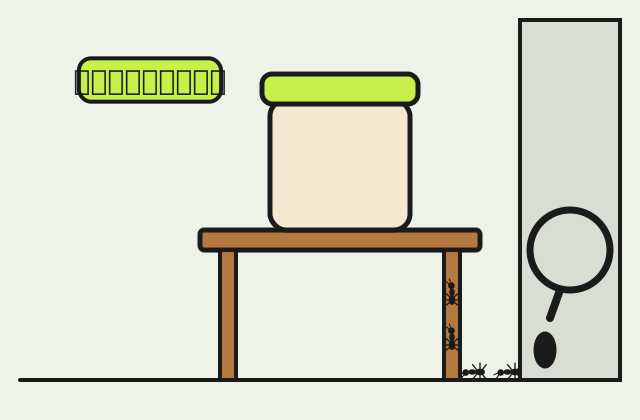
Stored well, so why do ants keep coming back to the rice bin?
If you have changed containers but ants in rice still come back, there are usually three causes. One, rice dust or broken grains are still around the bin or on the shelf. Two, something is acting as a bridge up to the bin, such as the bin leaning on the wall, a cloth bag hanging from the shelf, or a rice cooker cable running past it. Three, the old ant route still carries scent because only the area around the bin was wiped.
Follow the ant line back to where it ends. If it ends at a wall crack, a gap under a cupboard or the drain pipe under the sink, seal that gap and wipe the whole route. If the line ends inside a wall or under the floor, the nest is very close, and protecting the rice bin alone will not be enough; deal with the nest as described in the overview ants in the house.
In a kitchen where ants go for rice, sugar and pet bowls at the same time, group everything ants like in one zone and block that zone once. It is easier to manage than scattering pads or water trays all over the kitchen.
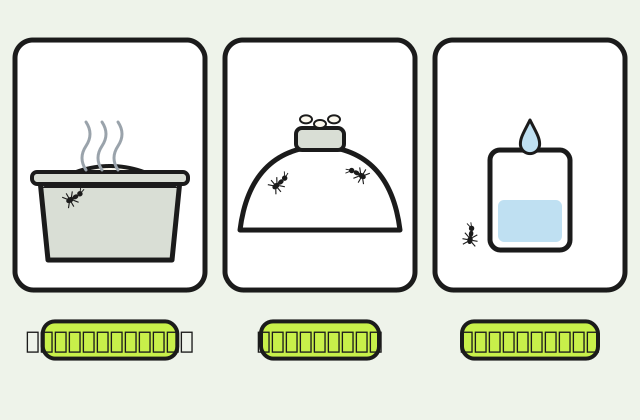
What causes ants in the rice cooker?
The main cause is starch and rice water left in the cooker’s crevices. Cooked rice contains starch that ants eat, and when the cooker stays on warm for a long time, steam carries starchy water up under the lid and around the steam vent, where it dries into a sticky film. That film gives off a smell outside the cooker even with the lid closed, so worker ants crossing the counter find it easily.
The second cause is water. Many models have a condensation cup at the side or back that collects drips from the lid. If it is not emptied, the water in it contains starch and gives ants something to drink all day. On models without a cup, water often drips onto the rim of the body and runs underneath, where you will not see it until you lift the cooker.
The third cause is rice around the cooker. Grains fall onto the counter, the rice paddle and the paddle holder clipped to the side when you serve. If they are not wiped up, ants start with the crumbs on the counter and then follow the smell up to the cooker itself. A cooker pushed against the wall, or with its cord running down from the socket to the floor, gives ants a direct path up.
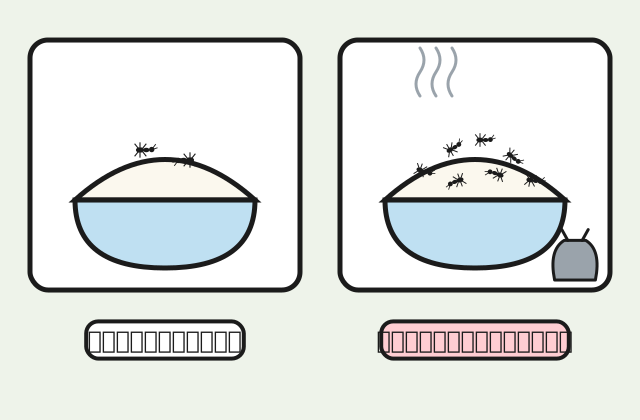
Can you still eat rice that ants got into?
If there are only a few ants on the surface and the rice still smells normal, many households scoop off the top layer with the ants and use the rice underneath, and that is each household’s call. If ants are spread through the rice, it smells sour or slimy, or it has been kept warm for many hours, throw the whole pot away, because the problem is not just the ants but rice that is starting to spoil.
Also think about where the ants walked before they reached the rice. Ants that crossed the bin, a drain or the bathroom floor on the way to the kitchen may have picked up dirt. If the rice is for young children, older people or someone with weak immunity, throwing it out and cooking a fresh pot is the safer choice. For any symptoms after eating, consult a doctor or pharmacist.
Do not reheat or stir-fry ant-infested rice to kill the ants, because the dead ants are still in it. And do not tip a whole pot into the kitchen bin without tying the bag, or the bin becomes the next place ants gather. Bag it, tie it and take it outside.
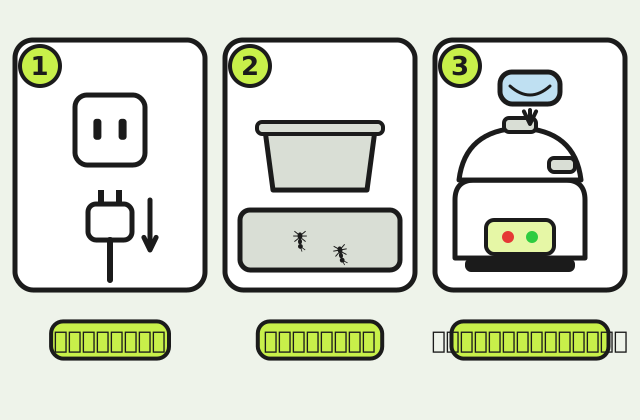
How do you get ants out of a rice cooker without damaging it?
Always unplug the cooker before cleaning, then take the inner pot to the sink. Scoop any ant-filled rice into a bag and tie it, and wash the inner pot as usual. Leave the lid open for a while so ants under the lid and around the rim walk out, then wipe the inner rim, the underside of the lid and the outside of the body with a well wrung-out damp cloth.
Never pour water into the body, submerge it, spray insecticide into the cooker or blow hot air into its openings, because the body contains a heating plate and electrical circuits. Which parts come off for washing varies by model: some have a removable inner lid and steam cap, others do not. Check the manual for your model before removing anything.
If you see ants going in and out of the control panel, the vents under the cooker or the seams of the body, they may already be inside. Do not open the body yourself. Stop using it and contact the brand’s service centre. A cooker with ants in its electrical parts should be checked by a technician who knows that model before it is plugged in again.
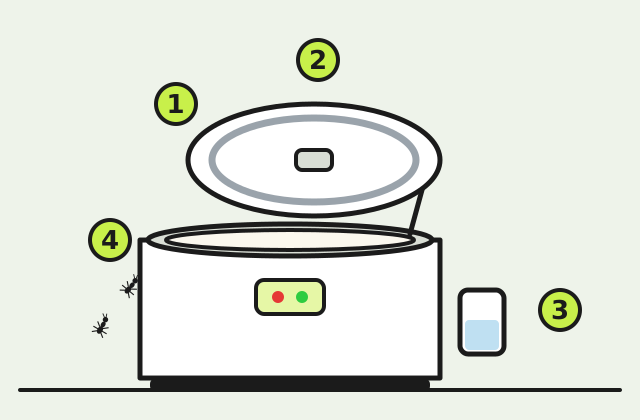
Which parts of a rice cooker do ants hide in, and how should you check them?
There are four favourite spots: the rubber seal around the inner lid where rice water has dried, the steam vent cap where grains splash up and stick, the condensation cup holding stale water, and the narrow gap between the inner pot rim and the body. None of these are visible with the lid closed. Open the lid fully and lift out the inner pot to see them clearly.
Shine a torch along the seal and around the rim gap. A cloudy white or yellowish line is dried rice starch. Wipe it off with a damp cloth or a dry soft brush. On models where the steam cap and inner lid come off, remove them, wash them with dish soap and let them dry fully before putting them back.
Check under the cooker too. Lift the whole unit and see whether water has pooled or grains are stuck under its feet, then wipe and dry the counter there. A cord coiled behind the cooker often has rice caught in its folds. Wipe it with a dry cloth while it is unplugged, and never use a wet cloth on the plug or the socket.
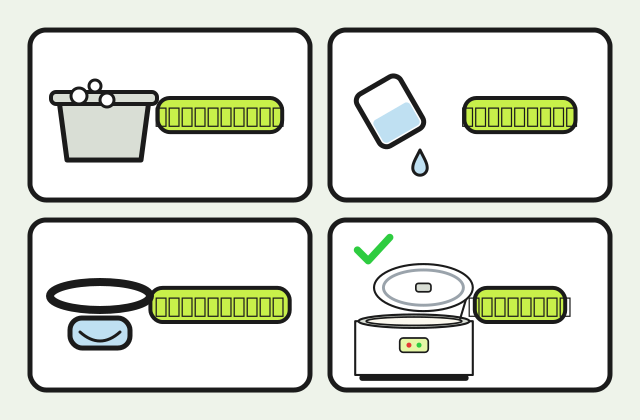
How should you look after a rice cooker every day to keep ants away?
Four habits help most: wash the inner pot as soon as the rice is finished, empty and rinse the condensation cup every day, wipe the inner lid seal dry, and leave the lid open for a while before closing it. Together they take a few minutes, but they leave no starch or standing water for ants to follow.
Do not leave the inner pot soaking in the sink overnight with rice stuck to the bottom. Rice soaking water is exactly what ants like, and the sink becomes their gathering point instead. If rice is stuck hard, soak it briefly and finish washing before bed. Wash the paddle and the paddle holder on the side of the cooker at the same time.
For cleaning, regular dish soap and a soft sponge are enough. A non-stick inner pot should not be scrubbed with steel wool or soaked in strong vinegar, which can damage the coating. If in doubt, follow the cleaning instructions in your model’s manual.
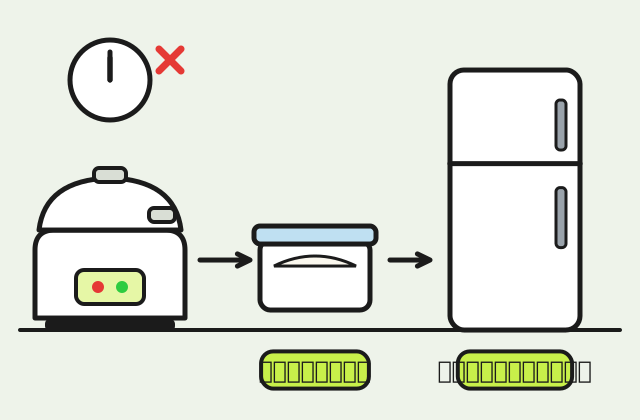
Does leaving the cooker on keep-warm cause ants in the rice cooker?
Leaving keep-warm on for long periods does make ants in the rice cooker more likely, because steam from warm rice keeps carrying starchy water up under the lid and the smell escapes through the steam vent. The longer it stays warm, the thicker the film around the lid and seal. How long rice can be kept warm depends on the model, so check the manual and avoid keeping it warm overnight as a habit.
Put rice left after dinner into a container with a tight lid, let it cool and refrigerate it, then reheat only what you need the next day. This helps with both ants and spoiled rice, because the cooker gets washed every night and there is no rice for ants to find at night, when the kitchen is quiet and they are most active.
If your household eats rice throughout the day and needs to keep it warm, close the lid every time you serve, wipe condensation around the rim with a dry cloth in the evening and empty the condensation cup more often. If ants have also got into uncooked rice, how to separate them from the grains and keep the bin dry is covered in ants in rice.
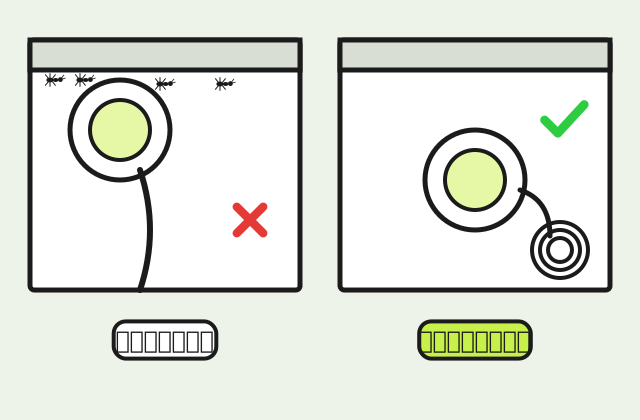
Where should the rice cooker go so ants struggle to reach it?
Place the cooker away from the wall and away from lines ants walk regularly, such as the counter edge against the wall, the corner with the sugar jar and the side of the bin. Ants like to walk along edges. A cooker in an open area makes them cross a smooth surface that you can see and wipe easily, and it does not connect the sugar jar’s ant trail to the cooker.
The cord is the path people forget most. If it runs down from a wall socket to the cooker, or hangs from the counter to the floor, ants use it as a bridge. Coil the extra length with a cable tie on the counter, and use a socket close enough that the cord does not have to cross the floor or a long stretch of wall.
If the socket the cooker uses has ants going in and out of its holes or cover plate, do not open the cover or spray anything into it. Switch to another socket for now and have an electrician check it. More on ants in power sockets and around kettles is in why ants go into power outlets.
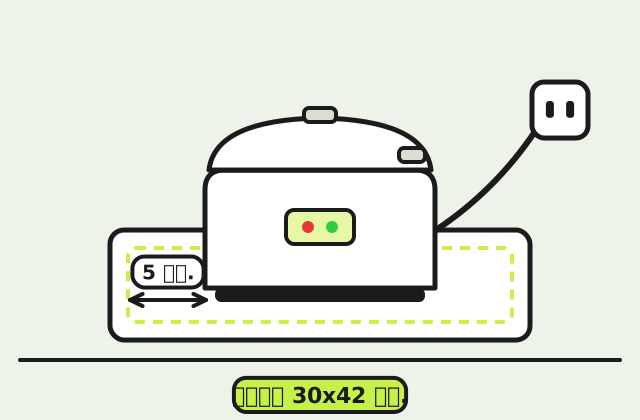
Can you stand a rice cooker on an anti-ant pad, and what should you check?
Yes, if the base is small enough to sit in the middle of the pad with at least 5 cm to every edge, as the manufacturer recommends. A 30x42 cm pad therefore takes a base of up to about 20x32 cm, so measure your cooker first. On the product page, a user describes using the pad under a rice pot and no longer having ants. Size and price are on the 30x42 cm anti-ant pad page.
Two more conditions: the cord must not run from the floor or wall to the cooker across the pad’s edge, because ants will follow it over, and the pad must be wiped when rice or water drips onto it. The pad manufacturer advises avoiding very hot items, so if the base of your model gets too hot to hold while cooking, ask the admin on LINE before standing it directly on the pad.
If the base is too big for the pad, combine other methods, such as a ring of anti-ant gel around the table or shelf legs the cooker stands on, a vertical surface where a pad cannot go. Details are on the anti-ant gel page. Both the pad and the gel block the route; neither replaces washing the cooker and wiping the counter every day.
Frequently asked questions about ants in rice
Can I put rice with ants in the freezer?
It can help separate the ants, but the rice must be in a sealed bag or container apart from other food, and when you take it out, let it return to room temperature in the closed container before opening, or moisture will settle on the grains. Spreading it on a tray somewhere bright is simpler.
How long should I sun rice that ants got into?
There is no fixed time. Sun it until you no longer see ants moving in the rice, in mild sunlight without letting the rice get very hot, then let it cool to room temperature before storing so no vapour forms in the container.
Can ants get into an unopened bag of rice?
Some plastic bags have air holes or leaky seams that small ants can get through. If you keep bagged rice for a long time, put it on a raised shelf or an anti-ant pad, and check the bag before storing it.
Do ants go for sticky rice or brown rice more than white rice?
There is no confirmed evidence that the type of rice makes a difference. Rice dust, damp and the container matter more. Brown rice has more oil in the bran, so store it sealed and use it by the date on the label.
Ants are on the rice cooker: what should I do?
Unplug it first every time, wash the inner pot and wipe rice residue around the lid. Never spray or pour water into the unit. Stand the rice cooker in the middle of an anti-ant pad and route the cable so it does not run up from the floor to touch the cooker. When ants in rice spread to the cooker, the spots they hide in and how to check the base fits the pad are in ants in the rice cooker.
There is no rice in the cooker, so why are ants still coming?
Usually because of dried rice starch on the lid seal, steam cap or rim gap, water still sitting in the condensation cup, and an ant trail on the counter that still smells. Check the four spots described above, then wipe the trail from the wall to the cooker with water and dish soap.
Ants got into the control panel. What should I do?
Stop using it and unplug it. Do not open the panel cover or spray anything inside, because it is an electrical part. Contact the brand’s service centre or a repair shop that services the model and tell them where you saw the ants. Meanwhile, keep the cooker somewhere with no ant trail.
Can pandan leaves, chilli or orange peel around the cooker keep ants away?
Some people feel it helps, but there is no confirmed evidence that it keeps ants away consistently, and fresh items left out wilt or go mouldy in the kitchen. If you want to try natural methods, the pros and limits of each are in natural ant repellents, used alongside daily washing.
Do I need a new rice cooker after ants got in?
Usually not. If the ants were only in the inner pot, under the lid and around the rim, clean it according to the manual and keep using it. Have a technician check it first if ants got into the body or control panel, or if it behaves oddly, such as the light not coming on, a burning smell or rice not cooking through.
There are ants on the hot water flask next to the cooker too. Same method?
The same principles apply: wipe spilled coffee or milk, keep the cord off the wall and never spray into the appliance. But do not stand a flask or kettle on an anti-ant pad, because there is no data yet on the pad’s heat resistance. Rely on placement and wiping the ant trail instead.
Should I wash the inner pot with vinegar to repel ants?
There is no need. Dish soap removes starch and the scent trail. A non-stick inner pot may be damaged by long soaking in acid. If you want to wipe the counter around the cooker with vinegar, check the surface first, because marble and some natural stone do not tolerate acid.